Every parent wants their child to love learning, but what if the secret isn’t how much they’re taught, but how they learn?
At Montessori Reggio Academy, we believe education should ignite curiosity, not conformity. Montessori education empowers children to explore, question, and create at their own pace, building a foundation for lifelong success. Here’s why this approach, rooted in over a century of research, works so remarkably well.
How Does Montessori Nurture Independence and Confidence?
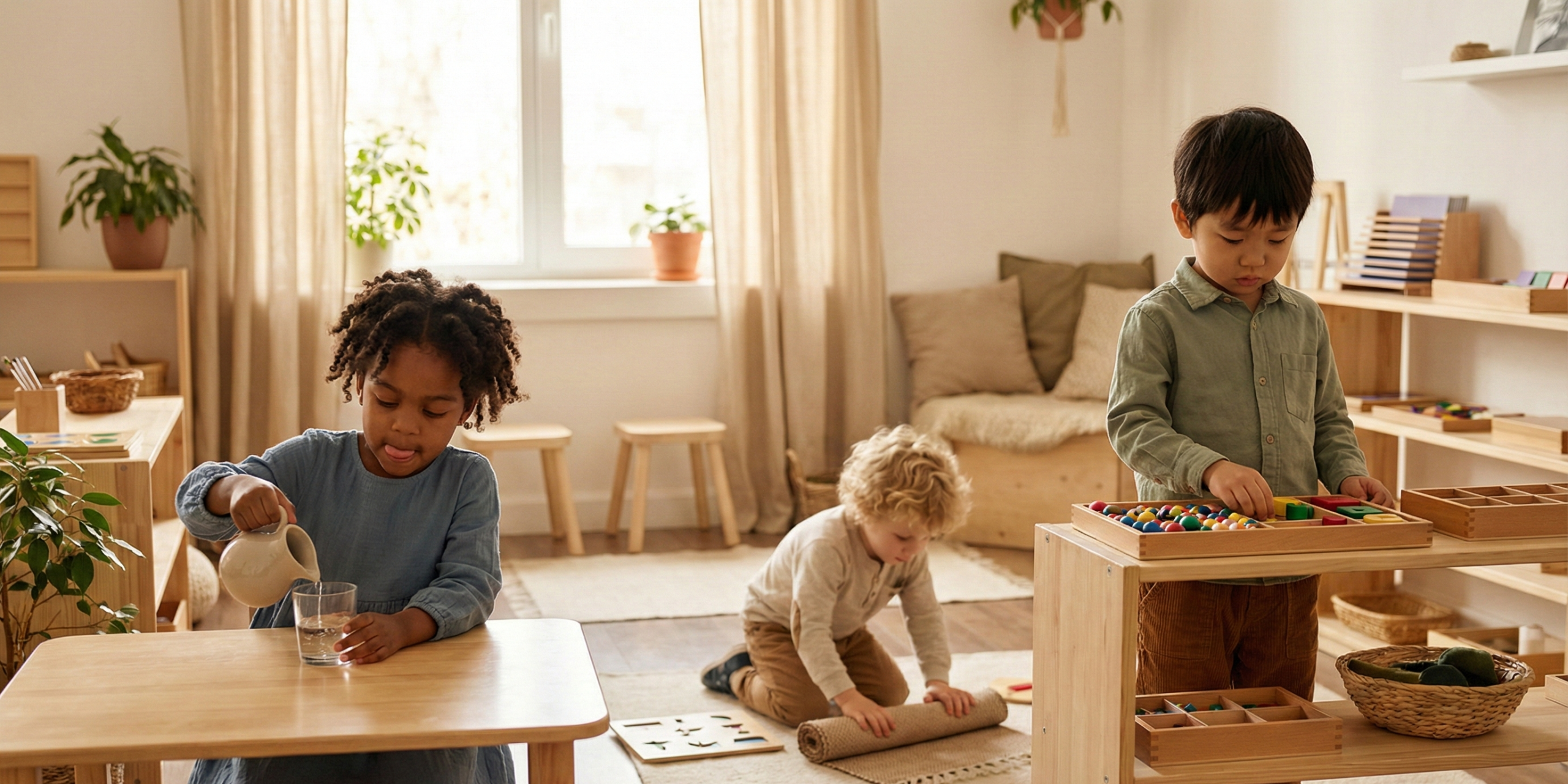
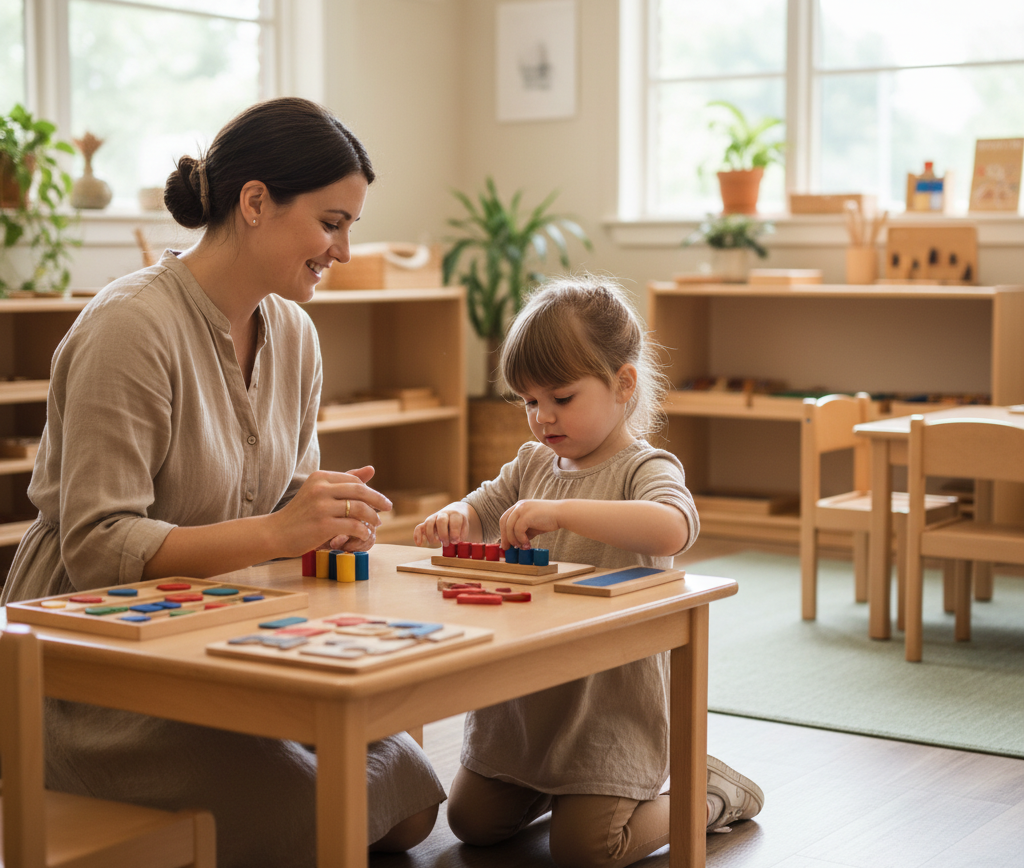
Montessori classrooms are carefully designed environments where children are free to make choices, solve problems, and take ownership of their learning.
When a child chooses their own activity, they’re not only learning academic skills, they’re developing executive function: the ability to plan, focus, and manage emotions.
At MRA, teachers act as guides, not lecturers. Instead of saying “do this next,” they observe, encourage, and provide just enough support to help students succeed on their own. This balance builds self-confidence and intrinsic motivation, qualities that stay with a child long after preschool.
What Makes Child-Led Learning So Effective?
Traditional education often assumes that all children learn the same way, at the same pace. But neuroscience tells a different story.
Research shows that when children are active participants in their learning, the brain forms stronger neural connections. Montessori classrooms use hands-on materials, beads for math, sandpaper letters for phonics, that engage multiple senses, helping abstract concepts “click” in tangible ways.
This sensory-driven approach doesn’t just teach academics; it builds critical thinking, creativity, and focus, all while making learning joyful.
How Does Montessori Support Social and Emotional Growth?
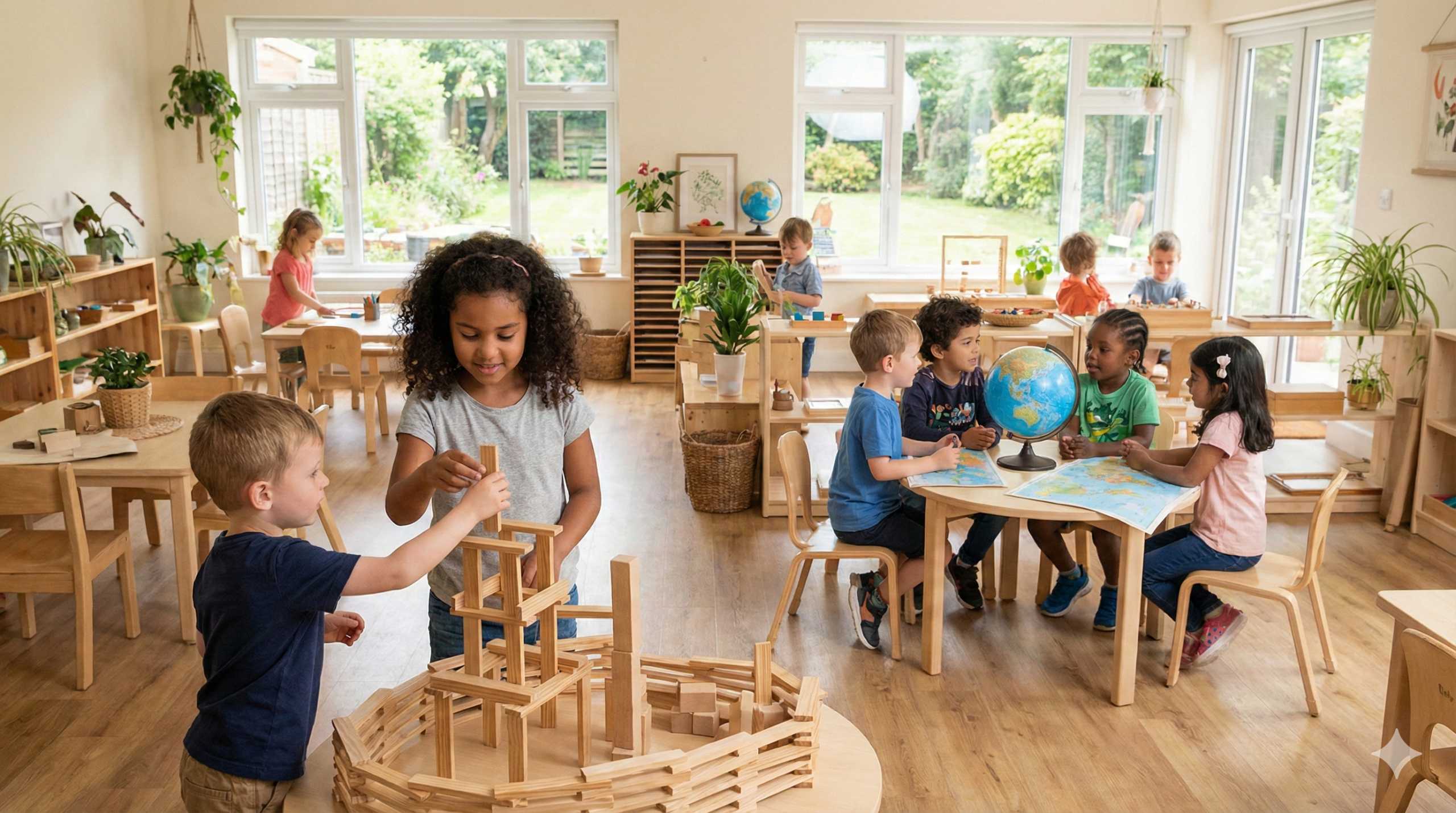
In Montessori classrooms, mixed-age groups are intentional.
Older children naturally mentor younger ones, while younger students learn cooperation and empathy through observation. This creates a peaceful, community-like atmosphere where respect and kindness are the norm.
At both MRA Katy and MRA Sugar Land, you’ll often see toddlers helping each other carry trays or primary students guiding friends through math activities. These moments aren’t accidents, they’re everyday lessons in empathy, leadership, and collaboration.
How Is Montessori Education Backed by Science?
Studies from institutions like Harvard and the American Montessori Society confirm that Montessori students often demonstrate:
- Higher levels of intrinsic motivation
- Stronger executive function and self-regulation
- Better social understanding and emotional intelligence
These findings align with what MRA teachers witness daily: children who love to learn, stay engaged longer, and handle challenges with resilience.
What Happens When Montessori Principles Continue Beyond Preschool?
The benefits of Montessori learning don’t stop in early childhood.
At MRA’s Primary and Advanced Primary levels, students continue to refine independence, time management, and academic mastery through self-directed projects. As they progress into elementary years, they’re not just memorizing facts—they’re applying knowledge creatively and confidently.
This prepares them for success in any environment, whether it’s a traditional school, a university, or the real world.
Why Parents Choose Montessori Reggio Academy
Families across Katy and Sugar Land choose MRA because it offers:
- Individualized learning paths for every child
- Certified Montessori and Reggio-inspired educators
- Beautiful, child-centered environments that spark curiosity
- A community of kindness and collaboration
MRA combines the proven principles of Montessori education with the creativity of the Reggio Emilia philosophy, giving children a balanced foundation for lifelong learning.
Ready to See Montessori in Action?
The best way to understand Montessori is to experience it.
Visit our Katy or Sugar Land campus, meet our teachers, and see how child-led learning transforms the classroom into a place of joy and discovery.
Frequently Asked Questions
Q: What ages do you accept at MRA?
A: We offer programs for infants (3 months) through elementary (5th grade), with classrooms tailored to each developmental stage.
Q: How is Montessori different from traditional preschool?
A: Montessori focuses on hands-on, self-directed learning. Children choose meaningful activities, while teachers guide rather than instruct.
Q: Do you offer tours?
A: Yes! We welcome parents to schedule a private tour of either our Katy or Sugar Land campus to experience our classrooms firsthand.
Author
Montessori Reggio Academy
Cognia-Accredited | Cambridge Early Years Program
Serving Katy & Sugar Land Families with Excellence in Early Childhood Education