Myth #1: “Montessori classrooms have no structure or rules”
The Truth: Montessori classrooms are actually highly structured, just differently than traditional settings.
While children do have freedom to choose their activities, this freedom operates within a carefully prepared environment with clear boundaries. At MRA’s Katy and Sugar Land campuses, our Montessori-trained teachers establish consistent routines, ground rules for respectful behavior, and specific procedures for using materials.
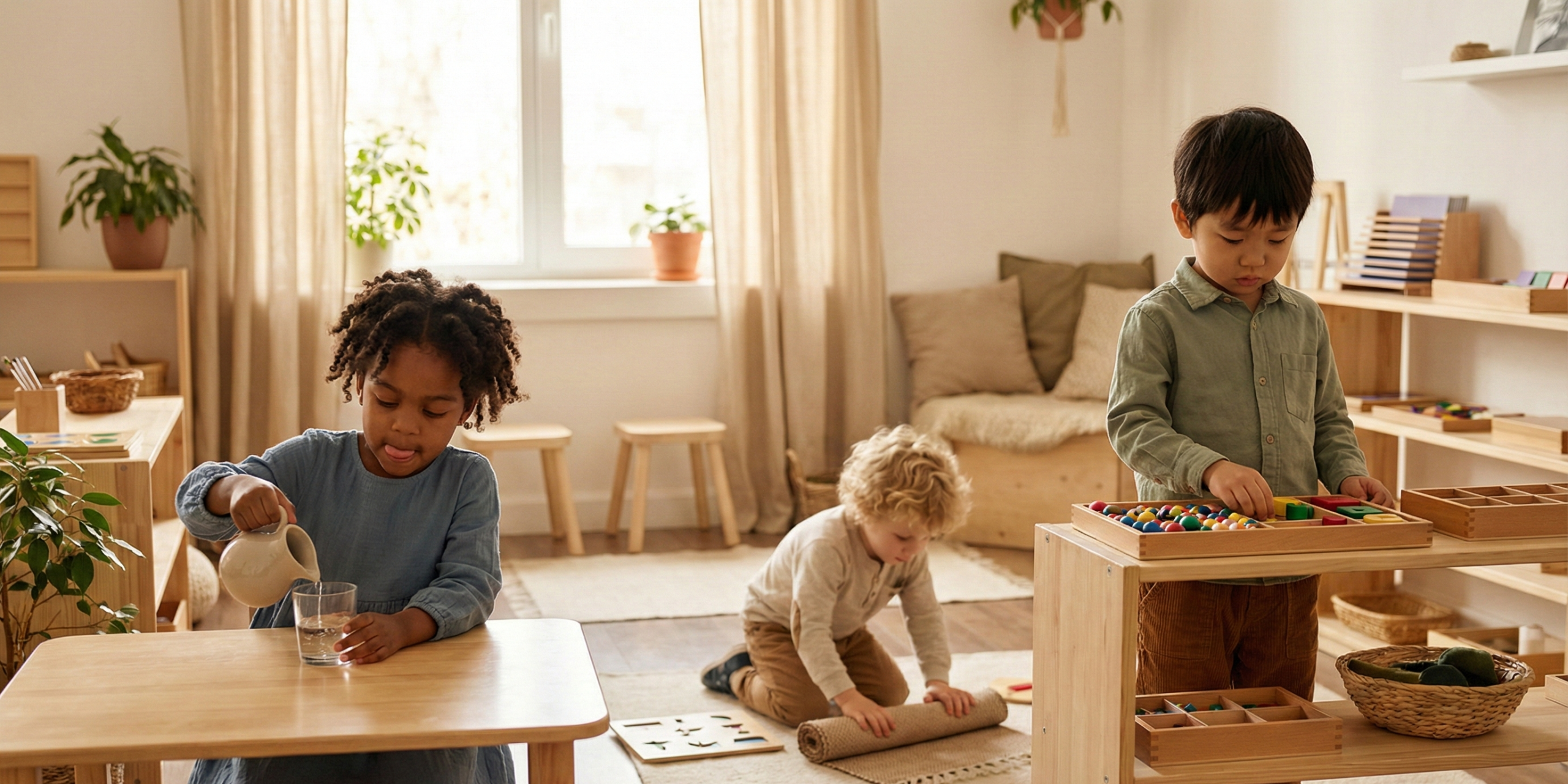
The structure comes from the environment itself. Every material has a designated place, every activity has a logical sequence, and children learn to follow these patterns naturally. This creates internal discipline rather than external control, a far more powerful foundation for lifelong learning habits.
Myth #2: “Children can do whatever they want, whenever they want”
The Truth: Children choose from purposeful, educational activities that teachers have carefully prepared.
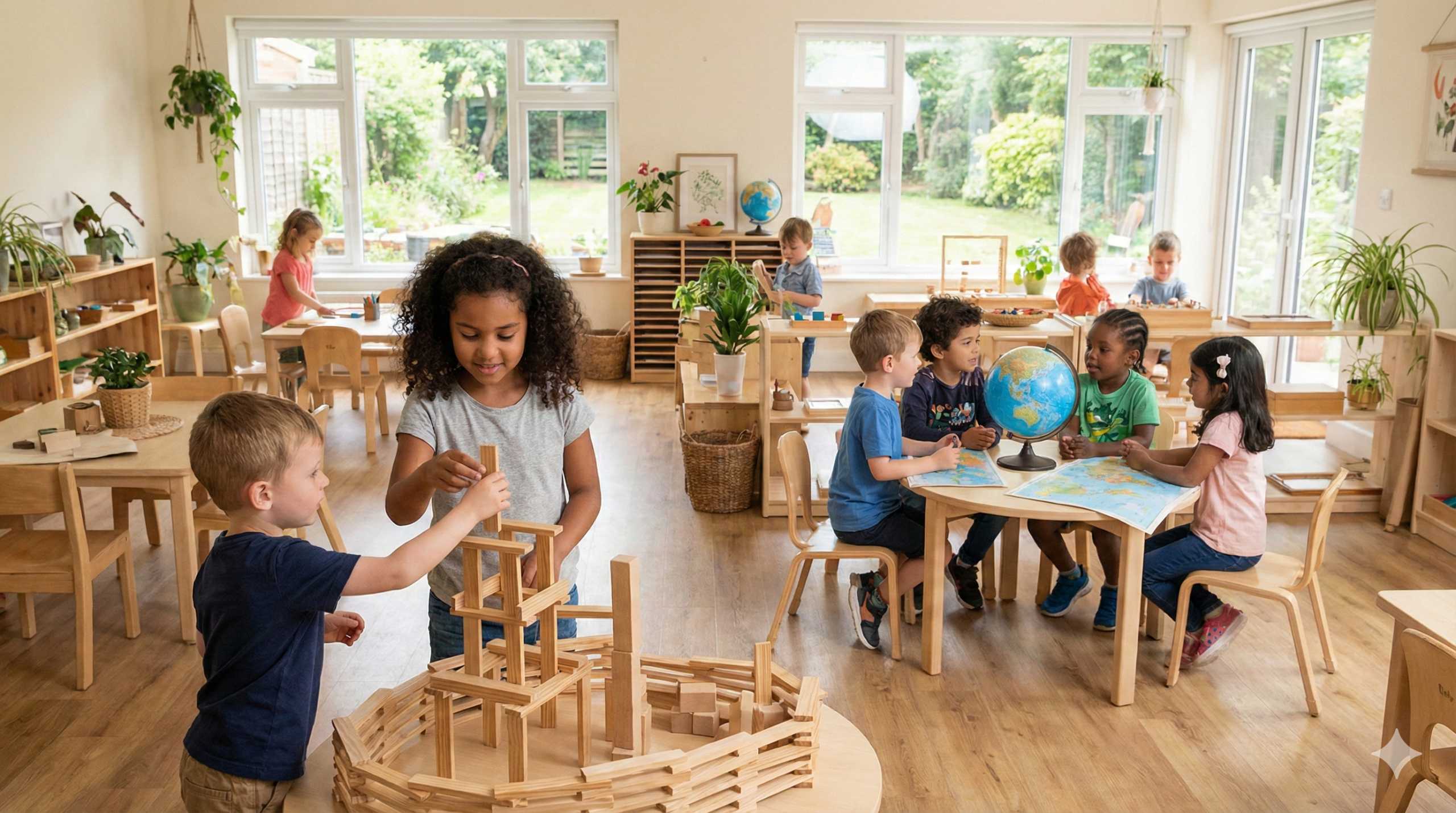
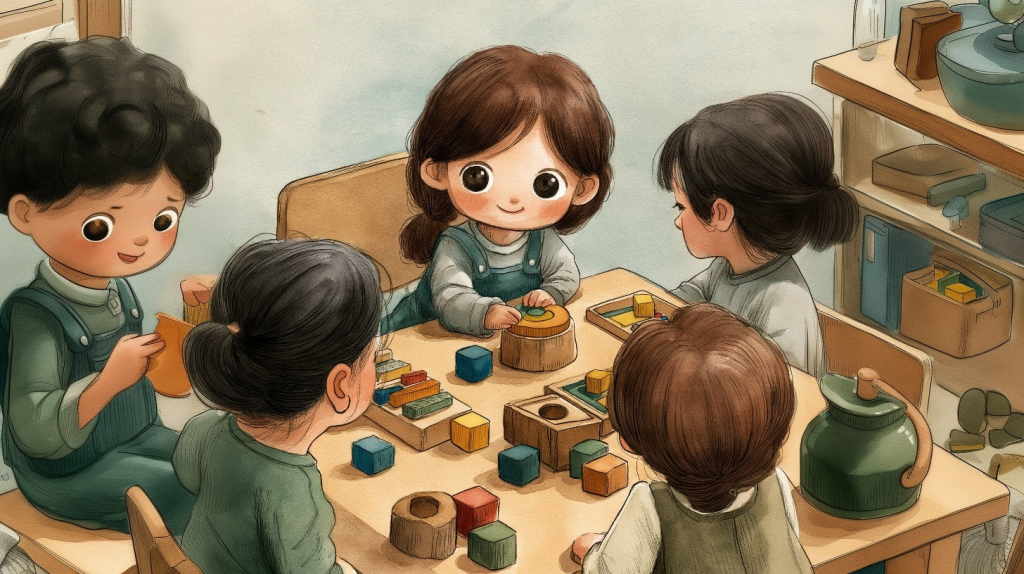
Freedom in Montessori doesn’t mean chaos. When you visit our classrooms, you’ll see children engaged in meaningful work, measuring rice, tracing sandpaper letters, or collaborating on geography puzzles. Teachers observe each child’s interests and developmental needs, then guide them toward activities that will challenge and inspire growth.
At MRA, our educators blend Montessori principles with Reggio Emilia creativity and Cambridge Early Years academic foundations. This means children experience freedom within a rich, intentional learning environment designed to spark curiosity and build confidence.
Myth #3: “Montessori students struggle when they transition to traditional schools”
The Truth: Research consistently shows Montessori students often outperform their peers in traditional settings.
Studies indicate that children from authentic Montessori programs demonstrate stronger critical thinking skills, better self-regulation, and more collaborative problem-solving abilities. These qualities serve them well regardless of their next educational environment.
The independence and self-motivation that Montessori cultivates don’t disappear when children enter different school settings. Instead, these students often become natural leaders who can adapt, think creatively, and work well both independently and in groups.
Myth #4: “Montessori is only for certain types of children”
The Truth: The Montessori approach benefits children across all learning styles and temperaments.
Some parents worry that their active child won’t thrive in Montessori, while others fear their quiet child might get lost. In reality, Montessori’s individualized approach serves both personalities beautifully.
Active children find appropriate outlets for their energy through hands-on materials and movement-based learning. Quieter children appreciate the calm, respectful environment where they can work at their own pace without pressure. At MRA, we see shy children blossom into confident communicators and energetic children develop remarkable focus and concentration.
Myth #5: “Montessori doesn’t prepare children academically for kindergarten”
The Truth: Montessori students often enter kindergarten ahead of their peers in both academic and social-emotional skills.
The Montessori curriculum covers all traditional academic subjects, reading, writing, mathematics, science, and geography, often in more depth than conventional preschools. The difference lies in how children learn these concepts.
Through concrete, manipulative materials, children understand mathematical concepts like the decimal system before they’re formally taught in traditional schools. They learn to write before they read, developing fine motor skills and phonetic awareness simultaneously. At MRA, our integration with Cambridge Early Years ensures children receive this rich foundation while building academic readiness for their next educational chapter.
Why These Myths Persist
Many misconceptions about Montessori stem from exposure to programs that call themselves “Montessori” without adhering to authentic principles. True Montessori education requires specialized training, specific materials, and deep understanding of child development.
At MRA, our teachers hold authentic Montessori certifications and integrate these practices with Reggio Emilia’s project-based learning and Cambridge Early Years’ structured literacy approach. This creates a comprehensive educational experience that honors Dr. Montessori’s vision while preparing children for today’s world.
Experience the Truth for Yourself
The best way to understand authentic Montessori education is to see it in action. We invite you to schedule a tour at our Katy or Sugar Land campus to observe our classrooms, meet our certified teachers, and ask questions about how our approach serves children’s development.
During your visit, you’ll witness the beautiful balance between freedom and structure, see children engaged in meaningful work, and understand why families choose MRA for their child’s foundation years.
Ready to discover what Montessori education can offer your family? Schedule a private tour at Montessori Reggio Academy and experience our global approach to early education firsthand.