In today’s interconnected world, preparing children for global citizenship begins in the earliest years of education. At Montessori Reggio Academy, we’ve created something unprecedented in early childhood education—a seamless integration of three world-renowned educational philosophies that together form what we call the Trifecta approach.
While most preschools in Katy and Sugar Land follow a single educational model, MRA combines the independence-building foundation of Montessori, the creativity and community focus of Reggio Emilia, and the academic structure of Cambridge Early Years. This isn’t simply offering three separate programs—it’s a carefully orchestrated educational symphony that prepares children for success in an increasingly global society.
The truth is, many myths about Montessori persist because people confuse authentic Montessori practices with loose interpretations they’ve encountered elsewhere. Today, we’re setting the record straight on five common Montessori myths, so you can make an informed decision about your child’s early education.
What Makes a Truly Global Education?
Global education extends far beyond teaching about different countries or cultures. It’s about developing children who can think critically, communicate across differences, adapt to new situations, and approach challenges with both independence and collaborative spirit.
Traditional early childhood programs often excel in one area while neglecting others. Some emphasize academic readiness but miss social-emotional development. Others focus on creativity while overlooking structured learning foundations. The most innovative educational approach recognizes that children need all these elements working together harmoniously.
The Montessori Foundation: Independence and Self-Direction
How does Montessori contribute to global readiness? The Montessori method builds the fundamental capacity for independent thinking and self-regulation that children need to navigate any cultural or academic environment they encounter.
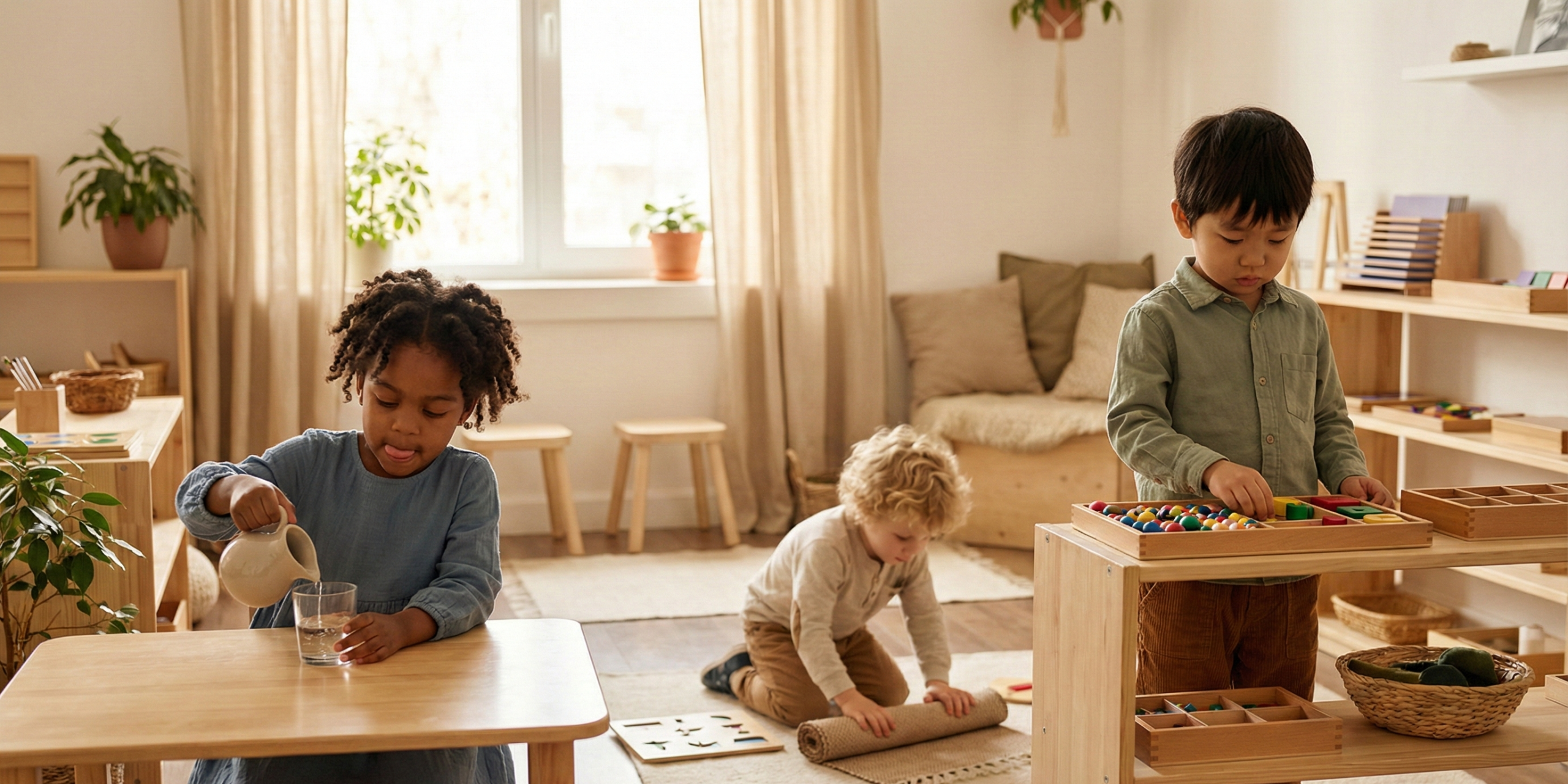
In our Montessori-prepared environments at both the Katy and Sugar Land campuses, children develop intrinsic motivation, learn to make thoughtful choices, and build confidence through hands-on exploration. They work with materials that teach abstract concepts through concrete experiences, developing mathematical thinking, language skills, and scientific understanding at their own pace.
This independence doesn’t mean isolation. Montessori children learn to help others, care for their environment, and take responsibility for their learning community. These skills translate directly to global citizenship—the ability to contribute meaningfully while respecting diverse perspectives and approaches.
The Reggio Emilia Enhancement: Creativity and Community
What does Reggio Emilia add to this foundation? The Reggio approach elevates creativity, documentation, and community collaboration to central roles in learning, reflecting the collaborative nature of our global society.
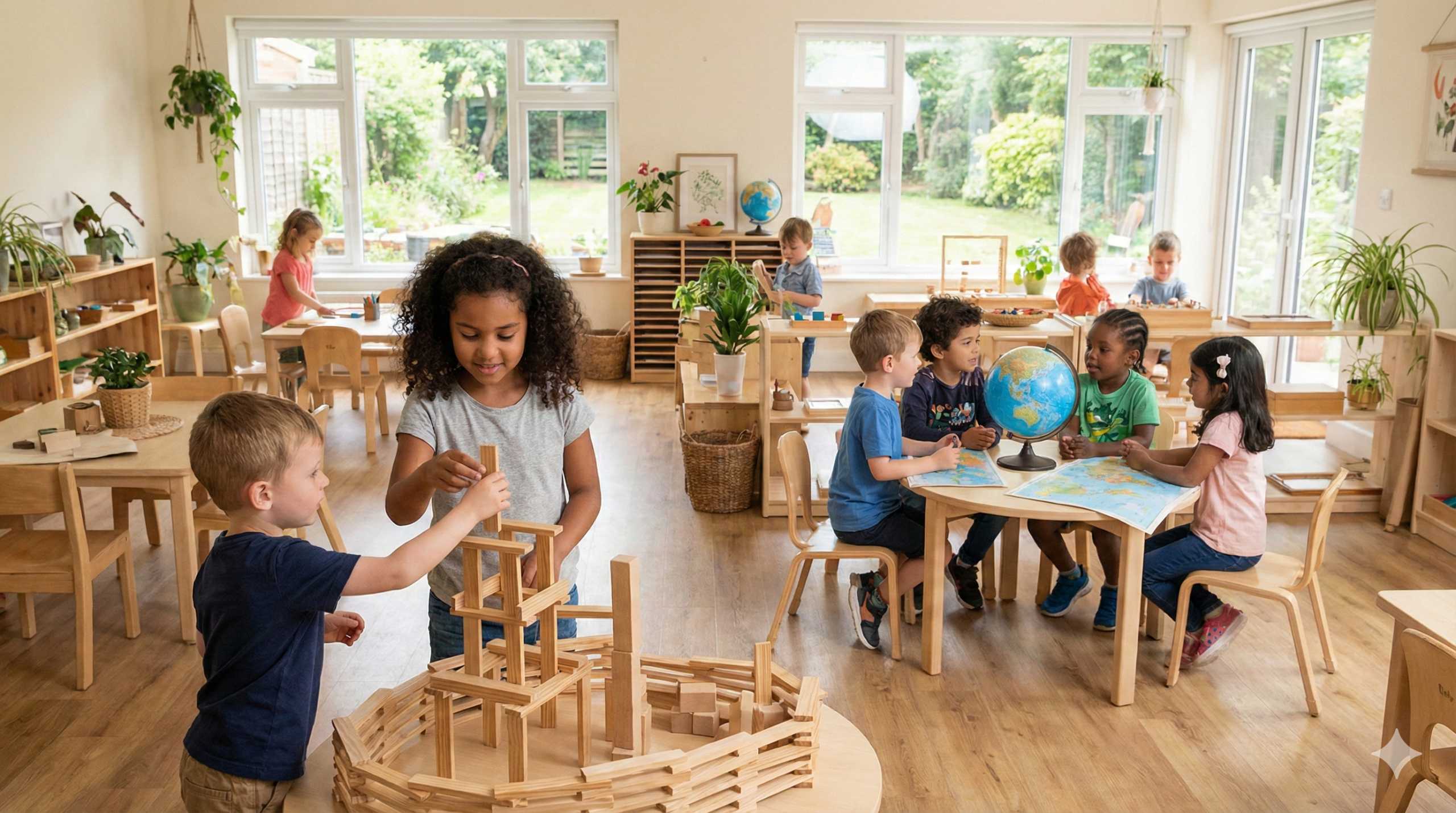
In Reggio-inspired project work, children at MRA investigate questions that matter to them while learning to see their thinking reflected and valued. They work together on complex investigations, document their discoveries, and present their learning to authentic audiences. This mirrors the collaborative problem-solving required in today’s interconnected world.
The Reggio principle of the “environment as third teacher” means our classrooms themselves communicate values of beauty, respect, and possibility. Children learn that their surroundings can support their thinking and that they can contribute to creating environments that serve everyone’s learning.
How the Trifecta Integration Works in Practice
What does this integration actually look like in our classrooms? Rather than switching between three different approaches, children experience a seamless educational environment where each philosophy enhances the others.
During a morning work cycle, a child might choose Montessori materials to explore fraction concepts (independence and concrete learning), then collaborate with peers to document their mathematical thinking through drawing and writing (Reggio documentation), while engaging in systematic phonics practice that builds reading fluency (Cambridge literacy development).
Teachers trained in all three approaches observe children’s interests and development, then provide experiences that draw from whichever framework best serves each child’s needs at any given moment. This requires sophisticated understanding of child development and extensive professional preparation—which is why MRA invests heavily in ongoing teacher education.
The Global Advantage for MRA Children
What specific advantages do children gain from this integrated approach? They develop what we call “adaptive excellence”—the ability to excel academically while remaining flexible, creative, and collaborative.
MRA children enter kindergarten with strong academic skills, but they also bring independence, creativity, and social competence that sets them apart. They can work alone or with others, follow directions or generate their own investigations, and approach new situations with confidence and curiosity.
Perhaps most importantly, they understand that learning happens in many ways and that different approaches can lead to the same goals. This metacognitive awareness—understanding how they learn best—serves them throughout their educational journey and prepares them to thrive in diverse cultural and academic environments.
Why Traditional Single-Method Approaches Fall Short
Why isn’t one excellent educational approach sufficient? Each individual philosophy, while powerful, addresses only part of what children need for 21st-century success.
Pure Montessori can sometimes underemphasize collaborative problem-solving and creative expression. Traditional Reggio programs may lack systematic skill development. Standard academic programs often miss the independence and intrinsic motivation that sustain lifelong learning.
The Trifecta approach ensures no crucial element gets overlooked. Children receive the systematic skill building they need, the creative and collaborative experiences that develop innovation skills, and the independence and self-direction that enable them to take ownership of their learning.
Preparing Global Citizens, Not Just Students
How do we know this approach works? The evidence appears in both formal assessments and in the daily observations of children who demonstrate remarkable adaptability, creativity, and academic competence.
MRA children transition successfully to various educational environments because they’ve learned to learn. They approach new situations with the independence Montessori cultivates, the collaborative spirit Reggio develops, and the academic confidence Cambridge provides.
More importantly, they demonstrate the kind of cultural flexibility and respect for diverse perspectives that our global society requires. They understand that there are many ways to approach problems and many valid forms of intelligence and expression.
Experience the Trifecta Difference
The best way to understand how these three educational philosophies work together is to observe them in action. We invite families to schedule a tour at our Katy or Sugar Land campus to see how our global approach to early education serves children’s development.
During your visit, you’ll witness the seamless integration of independence, creativity, and academic excellence that defines the MRA experience. You’ll meet our internationally trained teachers and observe children who are confident, capable, and excited about learning.
Ready to discover how the Montessori Reggio Cambridge Trifecta can provide your child with a truly global foundation for lifelong success? Schedule a tour at MRA and explore our comprehensive programs that prepare children for tomorrow’s world.