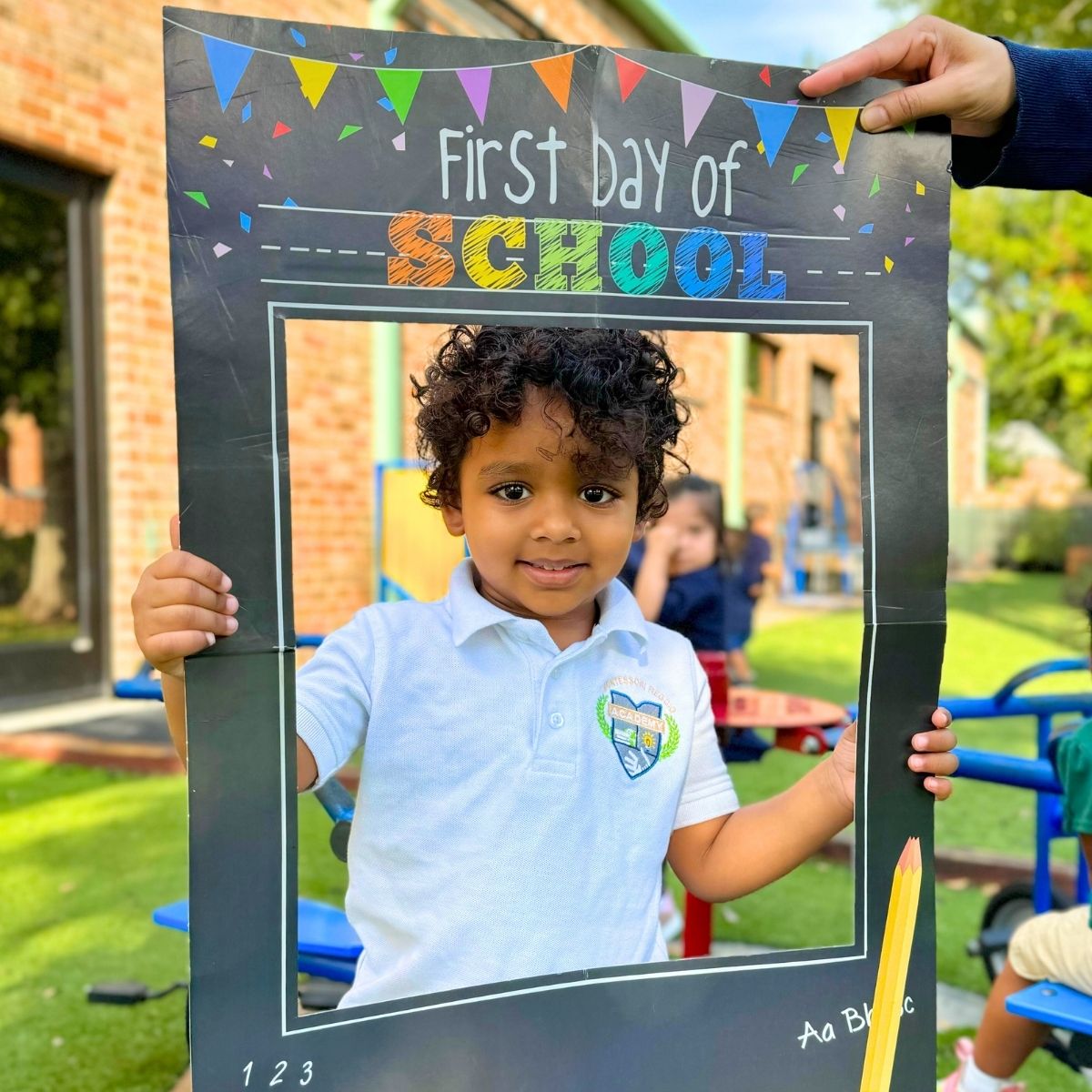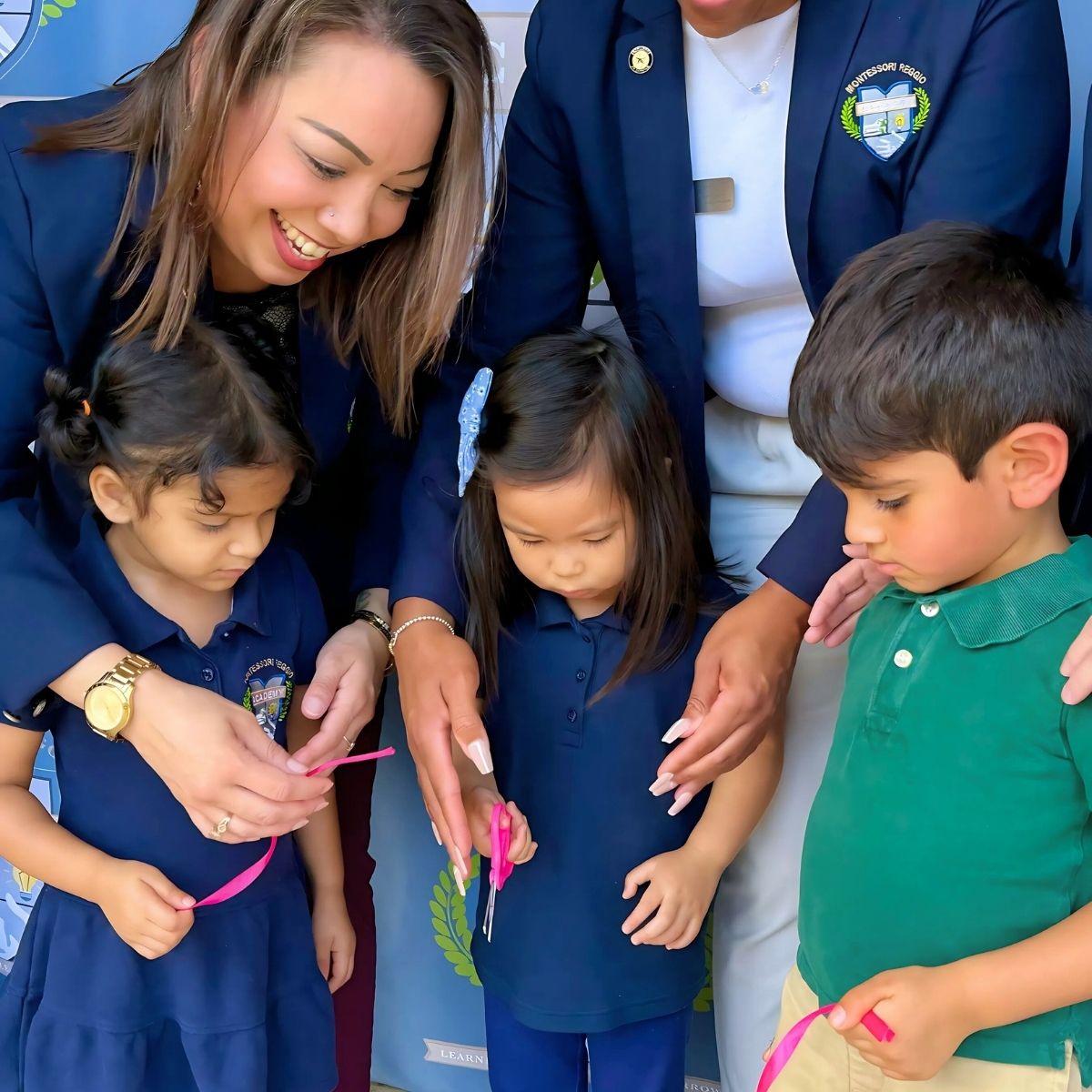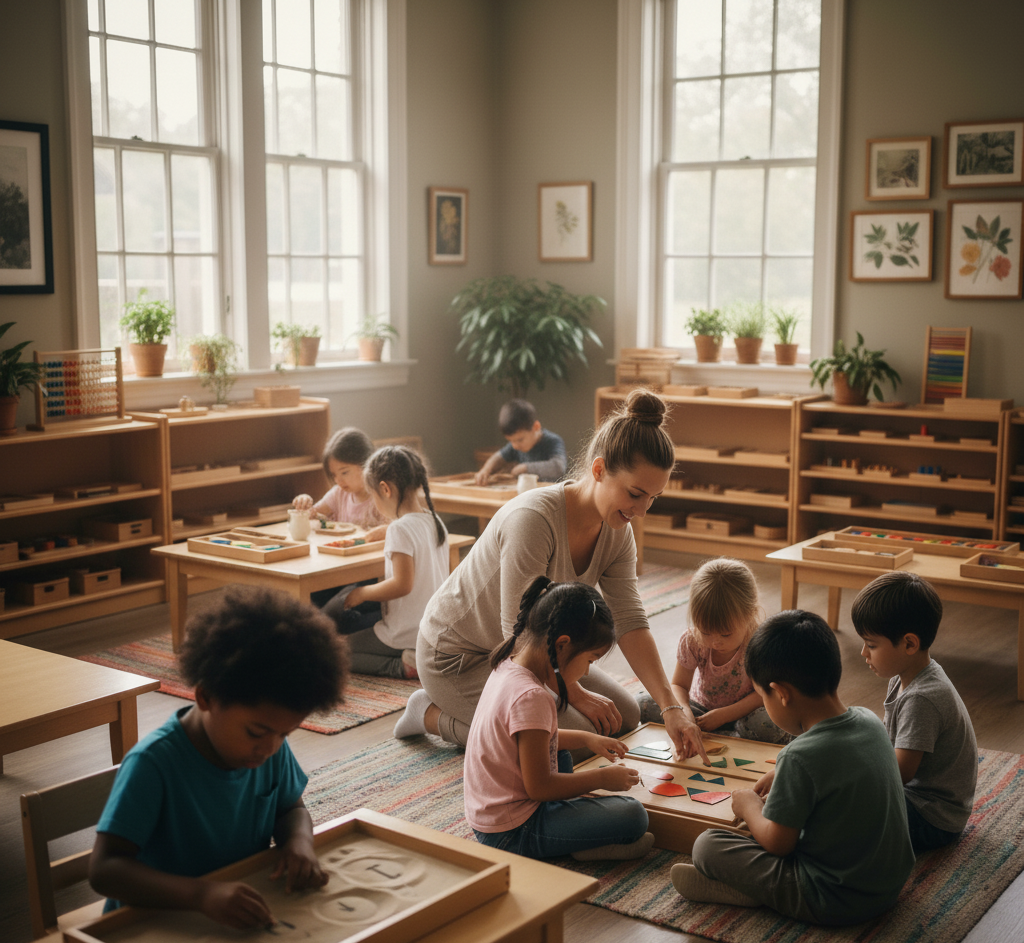
Walking into your child’s classroom for the first time can feel both exciting and overwhelming. What will they do all day? How will they spend their time? Will they be happy, engaged, and learning? At Montessori Reggio Academy in Katy and Sugar Land, we understand these natural parent concerns, and we’re excited to give you a glimpse into what your child’s days will look like in our nurturing, discovery-rich environment.
Unlike traditional preschool classrooms with rigid schedules and teacher-directed activities, MRA offers something beautifully different. Your child will experience the freedom to explore, the joy of discovery, and the confidence that comes from meaningful learning, all within our carefully integrated Montessori, Reggio Emilia, and Cambridge Early Years approach.
Morning Arrival: A Gentle Beginning
How does the day begin at MRA? Your child’s learning journey starts the moment they walk through our doors, greeted by the calm, prepared environment that characterizes authentic Montessori education.
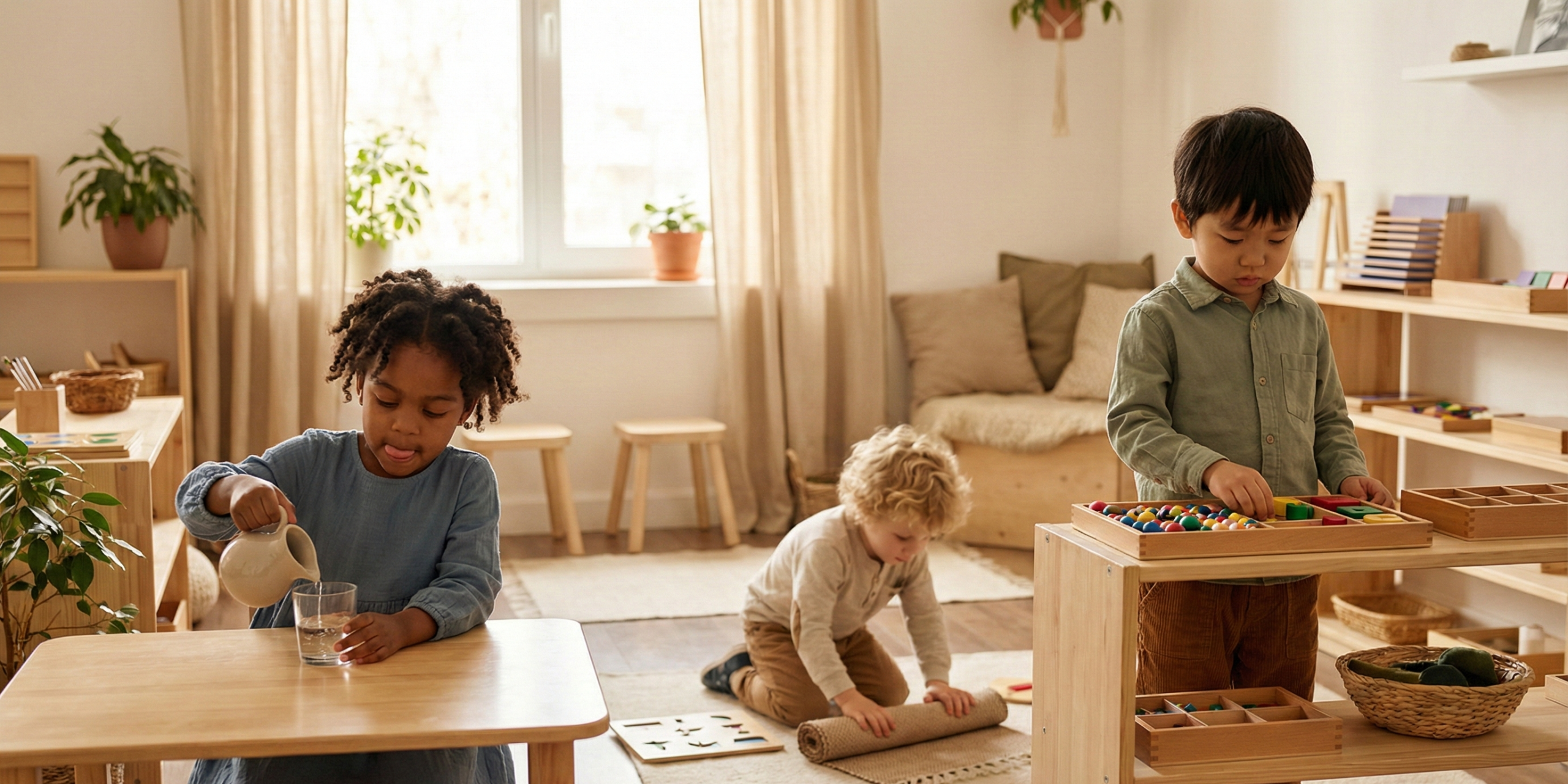
Children are welcomed by their teacher and encouraged to make independent choices about how to begin their day. Some children gravitate toward practical life activities like caring for classroom plants or arranging flowers. Others might choose quiet reading or reconnect with a friend through gentle conversation.
This peaceful beginning honors children’s natural rhythms while building the social-emotional foundation they need for successful learning. Teachers observe and gently guide, noting each child’s mood and interests to support their individual needs throughout the day.
The Work Cycle: Freedom Within Structure
What happens during the famous Montessori “work cycle”? This extended, uninterrupted period forms the heart of your child’s educational experience, allowing deep concentration and intrinsic motivation to flourish.
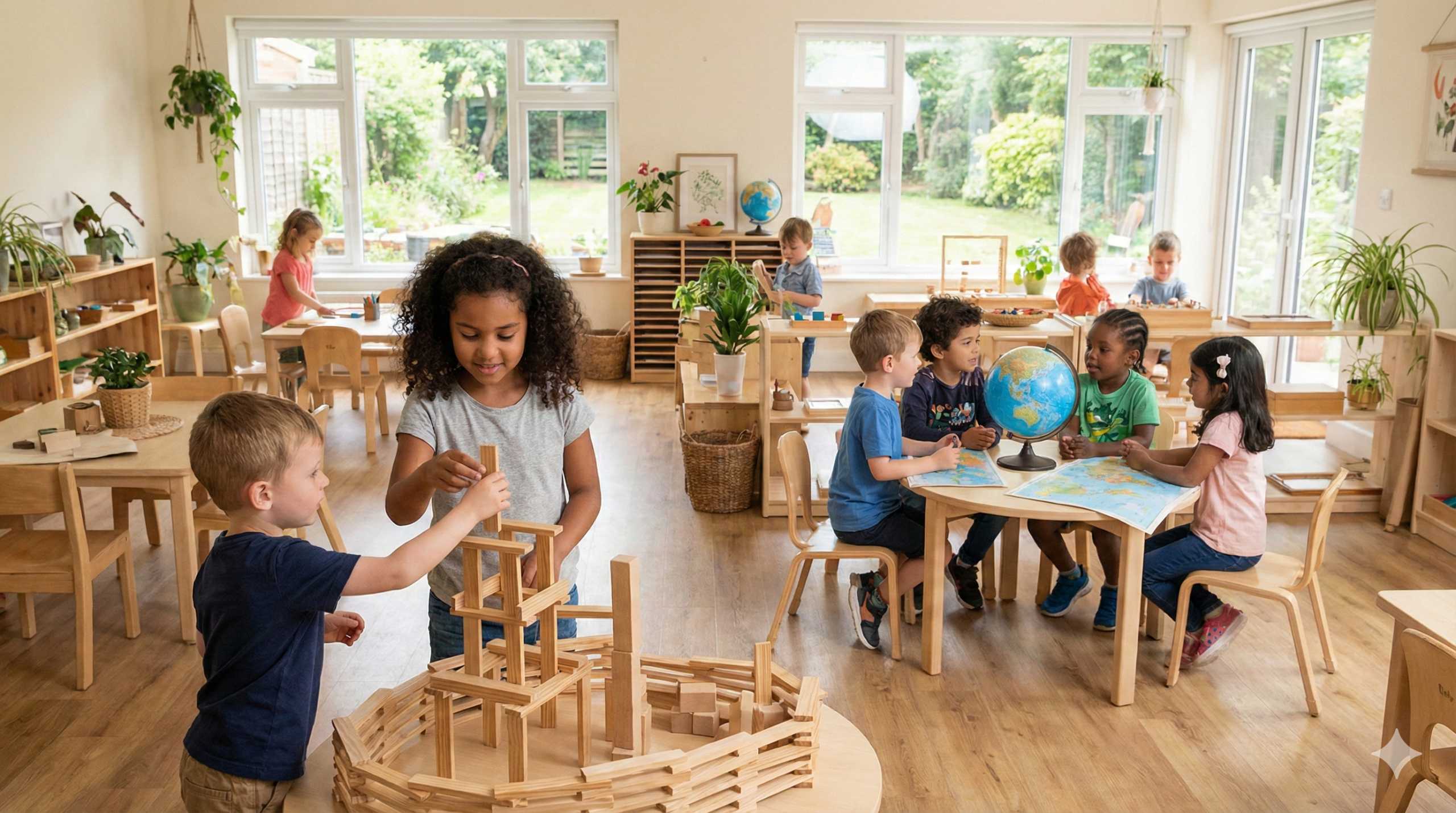
Children move freely around the classroom, choosing activities that capture their interest and match their developmental needs. Your child might spend significant time perfecting their pouring technique with small pitchers and bowls, then transition to exploring geometric shapes with wooden puzzle maps, followed by collaborative storytelling with friends.
Teachers trained in all three educational approaches—Montessori, Reggio Emilia, and Cambridge—observe carefully and offer gentle guidance. They might introduce new materials when a child shows readiness, facilitate problem-solving when conflicts arise, or document learning discoveries that can be shared with families.
Hands-On Learning Adventures
What kinds of activities will your child explore? The carefully curated materials in our classrooms invite discovery and support learning across all developmental areas.
In the practical life area, children develop independence and fine motor skills through real-world activities like food preparation, care of the environment, and grace and courtesy lessons. These activities might seem simple, but they build the concentration, coordination, and confidence that underlies all future learning.
Sensorial materials help children refine their senses and understand abstract concepts through concrete experiences. Your child might explore dimensions with the pink tower, discover color gradations with the color tablets, or develop auditory discrimination through sound cylinders.
Mathematical concepts come alive through beautiful, hands-on materials that make abstract ideas concrete. Children might trace sandpaper numbers, build quantities with golden beads, or explore patterns with red and blue rods.
Creative Expression and Documentation
How does creativity flourish in our integrated approach? The Reggio Emilia influence in our classrooms ensures that children’s thoughts, questions, and discoveries are valued and documented as part of the learning process.
Children engage in project-based investigations that might emerge from their questions about shadows, their interest in community helpers, or their curiosity about how things grow. These investigations involve multiple forms of expression; drawing, clay work, dramatic play, music, and movement.
Teachers document children’s thinking through photographs, recordings of conversations, and samples of their work. This documentation serves multiple purposes: it helps children reflect on their own learning, provides rich material for family conferences, and guides teachers in planning future experiences.
Academic Foundations Through Play
How do children develop reading, writing, and mathematical thinking? The Cambridge Early Years framework ensures systematic development of academic skills within our play-based, developmentally appropriate environment.
Literacy development begins with rich storytelling, phonetic games, and exposure to beautiful literature from diverse cultures. Children might trace letters in sand trays, build words with moveable alphabets, or create their own books about topics that fascinate them.
Mathematical thinking develops through concrete experiences that build toward abstract understanding. Children might sort and classify natural materials, explore patterns in nature, or use manipulatives to understand addition and subtraction concepts.
Scientific thinking emerges through exploration and investigation. Children might observe the life cycle of butterflies, experiment with simple machines, or document changes in their garden throughout the seasons.
Social Learning and Community Building
How do children learn to navigate friendships and collaborate effectively? Mixed-age groupings and collaborative projects provide natural opportunities for children to develop social skills and emotional intelligence.
Younger children learn by observing and receiving help from older peers, while older children develop leadership and empathy through teaching and mentoring. This creates a classroom community that mirrors the real world, where people of different ages and abilities support each other.
Conflict resolution skills are taught explicitly through grace and courtesy lessons and practiced naturally as children learn to share materials, take turns, and communicate their needs respectfully.
Outdoor Discovery and Nature Connection
What happens during outdoor time? Our outdoor environments are extensions of the classroom, designed to support discovery, physical development, and connection with the natural world.
Children might tend garden beds, observing plant growth and seasonal changes as part of their scientific investigations. They engage in gross motor activities that support their physical development while building confidence and cooperation.
Weather permitting, some learning activities move outdoors entirely. Children might practice writing letters in sand, sort and classify leaves and rocks, or continue collaborative projects in the fresh air and natural lighting.
Peaceful Transitions and Rest
How does the day include balance for children’s energy levels? Throughout the day, children experience peaceful transitions that honor their needs for both activity and rest.
The classroom rhythm includes opportunities for quieter activities that allow children to restore their energy. This might include rest for children who need it or calm activities like reading and drawing for those who are ready for continued gentle learning. This ensures everyone has the restoration they need to maintain engagement and joy throughout their time at school.
Integration in Action: The Trifecta Difference
How do you see the three educational approaches working together? Throughout the day, you’ll notice seamless integration of Montessori independence, Reggio creativity, and Cambridge structure.
A child might choose Montessori materials to explore mathematical concepts (independence), collaborate with peers to document their discoveries through drawing and conversation (Reggio documentation), while engaging in systematic phonics practice that builds reading fluency (Cambridge literacy development).
This integration isn’t forced or artificial, it flows naturally from our teachers’ deep understanding of how children learn and develop. The result is an educational experience that honors the whole child while building strong foundations for future success.
What This Means for Your Child
How will this classroom experience benefit your child’s development? Children in our integrated environment develop what educators call “executive function,” the ability to focus attention, remember instructions, and juggle multiple tasks successfully.
They learn to make thoughtful choices, persist through challenges, and collaborate effectively with others. Perhaps most importantly, they develop intrinsic motivation and a genuine love of learning that will serve them throughout their educational journey.
Experience a Day at MRA
The best way to understand what your child’s days will be like is to observe our classrooms in action. We invite you to schedule a visit to our Katy or Sugar Land campus to see the joyful learning, meaningful activities, and nurturing community that define the MRA experience.
During your visit, you’ll witness children deeply engaged in their chosen work, teachers facilitating discovery rather than directing activity, and the beautiful balance of independence and collaboration that characterizes our approach.
Ready to see how your child will thrive in our discovery-rich environment? Visit our admissions page to schedule a classroom observation and learn more about joining the MRA community.