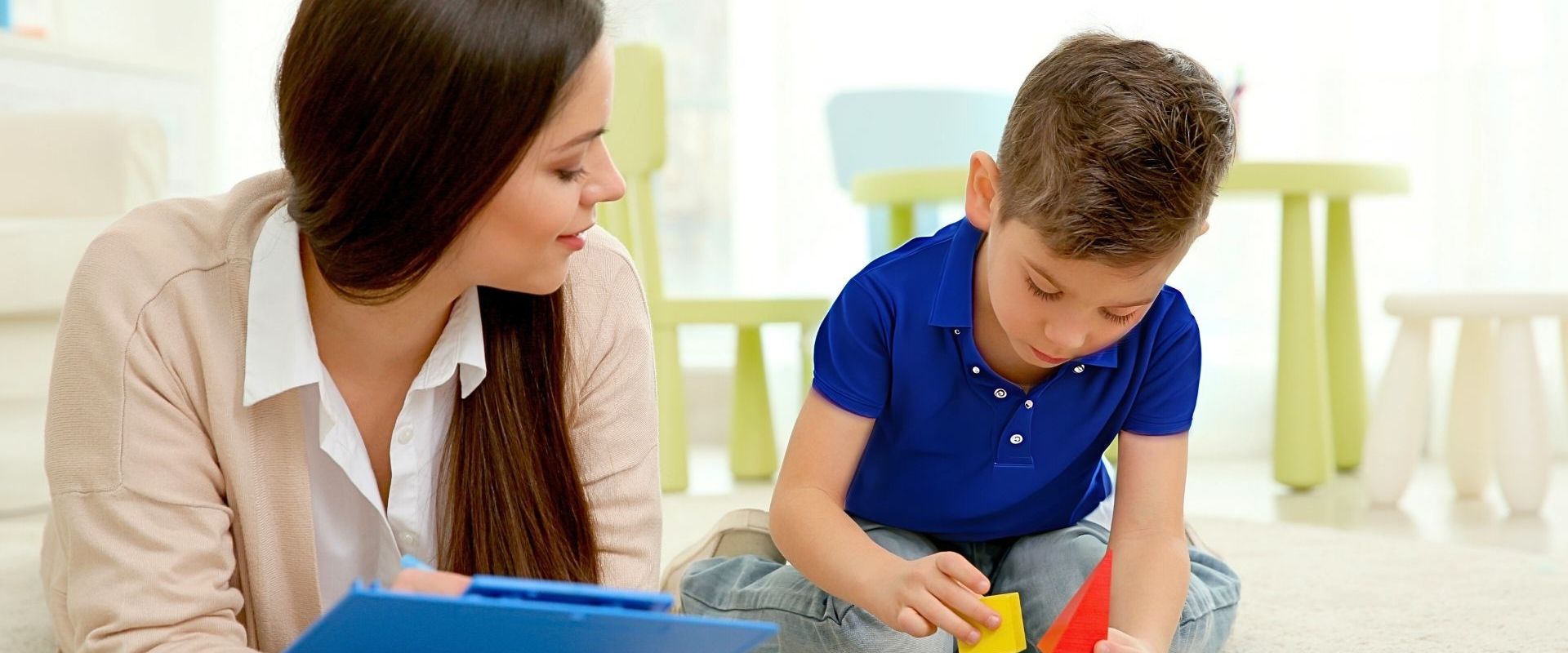
What Does Real Independence Look Like in Early Childhood?
True independence in early childhood isn’t about leaving children to figure everything out alone—it’s about providing the right support structure that allows them to develop genuine confidence through successful experiences.
At MRA, we distinguish between independence and permissiveness. Independence means giving children the tools, environment, and guidance they need to make meaningful choices and learn from the natural consequences of their decisions. This approach, rooted in Montessori philosophy, recognizes that children have an innate drive toward independence when given appropriate opportunities.
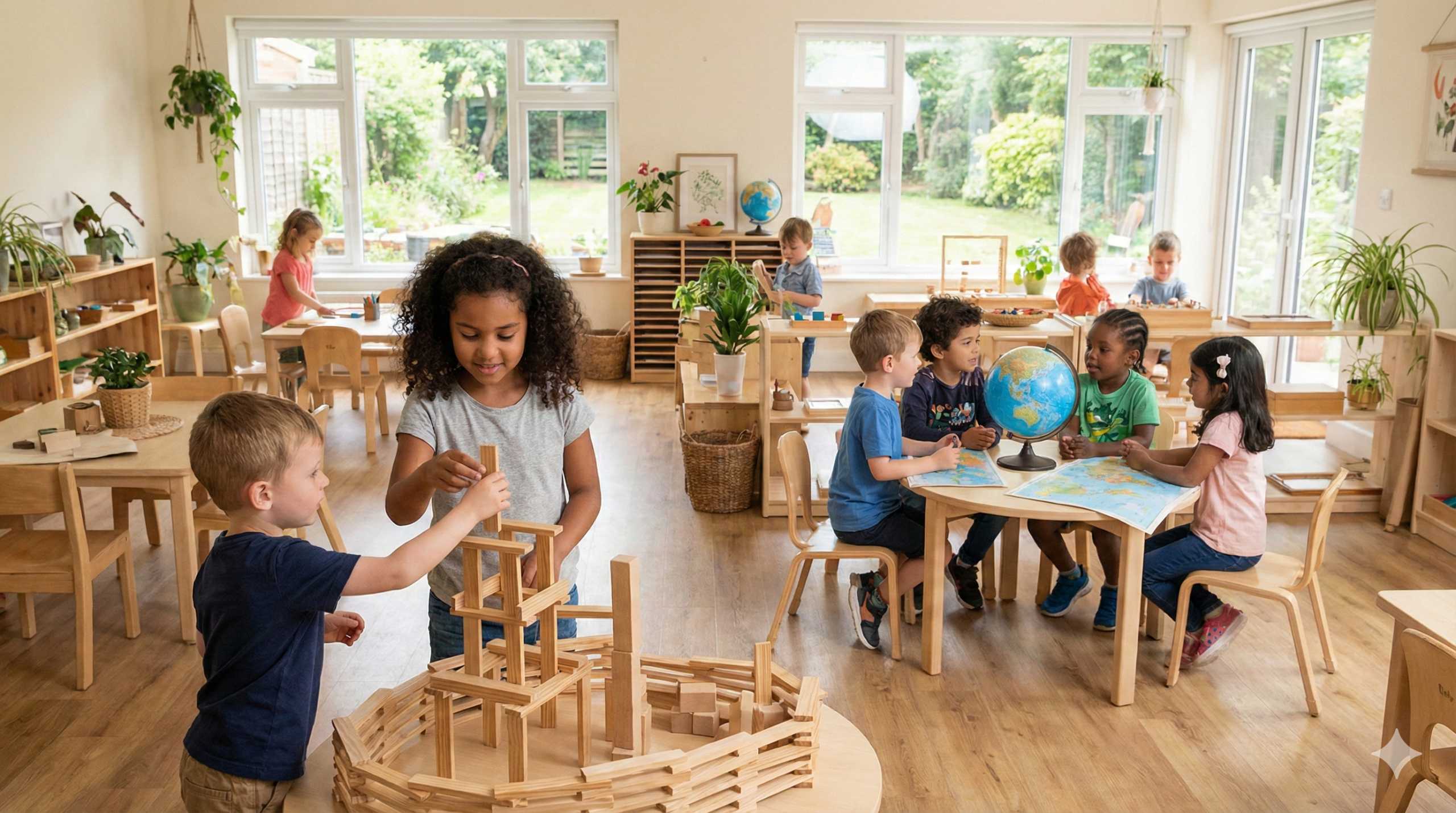
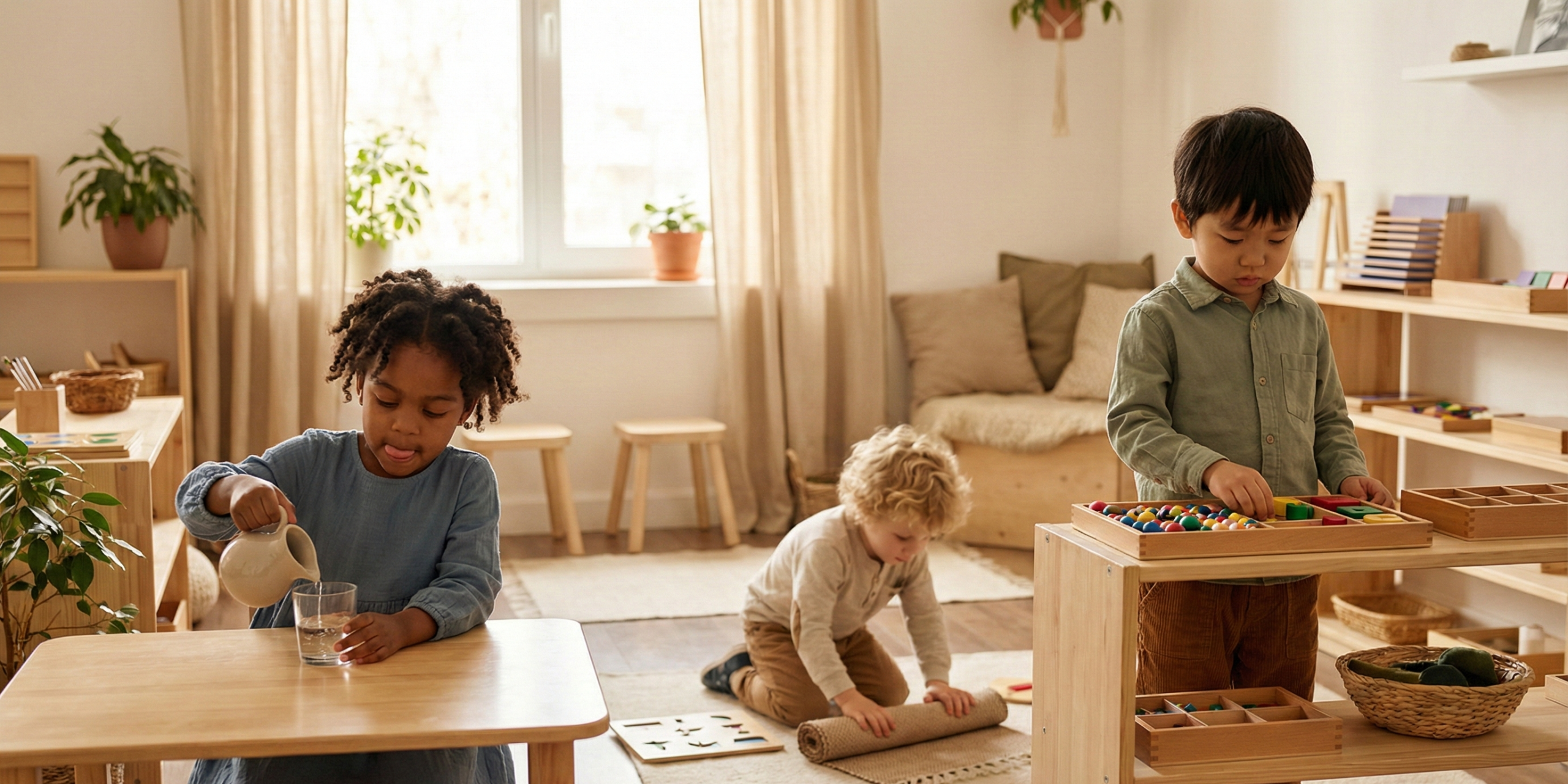
Our classroom environments are specifically designed to foster this natural development. Child-sized furniture, accessible materials, and clearly defined spaces allow children to engage with their learning environment without constantly needing adult assistance. When a three-year-old can independently choose their learning activity, gather their materials, complete their work, and clean up afterward, they experience the deep satisfaction that comes from true accomplishment.
Research shows that children who develop genuine independence in early childhood demonstrate higher self-esteem, better problem-solving abilities, and increased resilience when facing new challenges. These aren’t just academic benefits—they’re life skills that serve children throughout their educational journey and beyond.
How MRA’s Montessori Environment Builds Natural Confidence
The Montessori component of our educational approach focuses specifically on what Dr. Maria Montessori called “functional independence”—the ability to care for oneself and contribute meaningfully to one’s community.
Practical life activities form the foundation of confidence-building at MRA. Children engage in real work that has genuine purpose: preparing snacks for classmates, caring for classroom plants, or organizing learning materials. These aren’t just activities to keep children busy—they’re carefully designed experiences that build fine motor skills, sequencing abilities, and most importantly, the understanding that their contributions matter.
Our prepared environments remove obstacles to independence while maintaining appropriate structure. Materials are self-correcting, meaning children can identify and learn from mistakes without adult intervention. This builds internal motivation and confidence because children experience the satisfaction of figuring things out themselves.
Consider how a child approaches the practical life station where they’re learning to pour water. The child-sized pitcher, appropriately sized glasses, and readily available sponge for cleanup create an environment where the child can practice, make mistakes, and improve their skills independently. Each successful pour builds confidence; each cleanup reinforces responsibility.
Multi-age classrooms further enhance confidence development as older children naturally mentor younger ones, while younger children observe and aspire to the independence demonstrated by their older classmates. This creates a community where leadership emerges naturally rather than being imposed.
The Reggio Emilia Difference: When Children Lead Their Own Learning
While Montessori principles establish the foundation for independence, our Reggio Emilia approach ensures that children develop confidence in their ability to think, create, and express themselves in multiple ways.
Project-based learning at MRA emerges from children’s genuine interests and questions. When children drive their own investigations—whether exploring shadows, investigating how plants grow, or creating architectural models—they develop confidence in their ability to learn, hypothesize, and discover.
The “hundred languages” philosophy recognizes that children express their understanding through art, movement, building, music, and countless other modalities. This approach builds confidence by honoring each child’s unique strengths and learning style. A child who struggles with verbal expression might excel at communicating through clay sculpture or dramatic play.
Documentation and reflection make learning visible and help children see themselves as capable learners. When children review photos and recordings of their work, they begin to understand their own thinking processes and growth. This metacognitive awareness builds confidence because children can literally see their competence developing over time.
Collaborative investigations teach children that their ideas have value while also developing skills in listening, negotiation, and shared problem-solving. Children learn to lead and to follow, to contribute their strengths while appreciating the contributions of others.
From Decision-Makers to Problem-Solvers: Leadership Skills in Action
Real leadership emerges when children have opportunities to practice decision-making, problem-solving, and responsibility in meaningful contexts. At MRA, these opportunities are embedded throughout each day.
Classroom responsibilities give children legitimate leadership roles within their community. Children might serve as line leaders, supply managers, or conflict resolution helpers. These aren’t token positions—they’re real jobs with genuine impact on classroom life.
Choice-making opportunities occur constantly: Which learning activity to pursue? How to approach a challenge? What materials to use for a project? These decisions might seem small, but they build the decision-making muscles that leaders need.
Problem-solving challenges arise naturally in a rich learning environment. When the block tower keeps falling, children learn to analyze the problem, consider multiple solutions, and test their hypotheses. When two children want the same material, they practice negotiation and compromise.
Community meetings provide forums where children share ideas, solve group problems, and make decisions that affect their classroom community. Children learn to voice their opinions respectfully, listen to others’ perspectives, and work together toward solutions.
Our globally-trained educators guide these experiences without controlling them. They observe, document, and facilitate when appropriate, but they understand that genuine leadership skills develop through practice, not instruction.
Why Independence Today Creates Tomorrow’s Leaders
The independence and confidence children develop at MRA aren’t just benefits for their preschool years—they’re foundational skills that prepare children for leadership throughout their lives.
Academic confidence emerges when children understand themselves as capable learners who can tackle new challenges. Children who have experienced success through independent exploration approach new academic subjects with curiosity rather than anxiety.
Social leadership develops through daily practice in communication, collaboration, and community contribution. Children learn that leadership isn’t about having power over others, but about using their abilities to support and enhance their community.
Emotional intelligence grows when children have opportunities to navigate challenges, express themselves authentically, and develop empathy through meaningful relationships with diverse peers and caring adults.
Global citizenship emerges through our Cambridge Early Years framework, which helps children understand their connection to the broader world community and their responsibility to contribute positively.
The children who graduate from MRA’s early childhood program enter elementary school not just academically prepared, but with the independence, confidence, and leadership skills that serve them throughout their educational journey and beyond.
Nurturing Your Child’s Leadership Potential at MRA
At Montessori Reggio Academy, building independence and confidence isn’t a separate curriculum component—it’s woven into every aspect of our educational approach. Our unique combination of Montessori’s prepared environments and Reggio Emilia’s child-led investigations creates the perfect conditions for developing natural leaders.
Our globally-trained educators understand child development and how to create environments that challenge children appropriately while providing the support they need to succeed. Our mixed-age classrooms provide natural mentorship opportunities and a sense of community that extends beyond traditional grade-level groupings.
Most importantly, our educational philosophy recognizes that every child has leadership potential that emerges when they feel confident, capable, and valued for their unique contributions.
Ready to see how MRA’s unique educational environment can nurture your child’s independence and leadership potential? Schedule a tour to experience our Montessori and Reggio Emilia classrooms firsthand and discover how we can support your child’s journey toward becoming a confident, capable, and compassionate leader.