A child’s earliest years are filled with learning. Long before formal academics become the primary focus, children are discovering how to communicate, solve problems, interact with others, complete tasks independently, and make sense of the world around them. These experiences provide a foundation for both future education and everyday life.
Quality Early Childhood Education recognizes that preparing children for school involves much more than teaching letters and numbers. Children also need confidence, curiosity, communication skills, independence, emotional awareness, and the ability to work with others.
For families in Sugar Land, Katy, and surrounding Texas communities, choosing an educational environment that supports the whole child can help young learners build skills they will continue using well beyond preschool.
Early Learning Develops Independence
One of the most valuable abilities children can develop is the confidence to complete appropriate tasks independently.
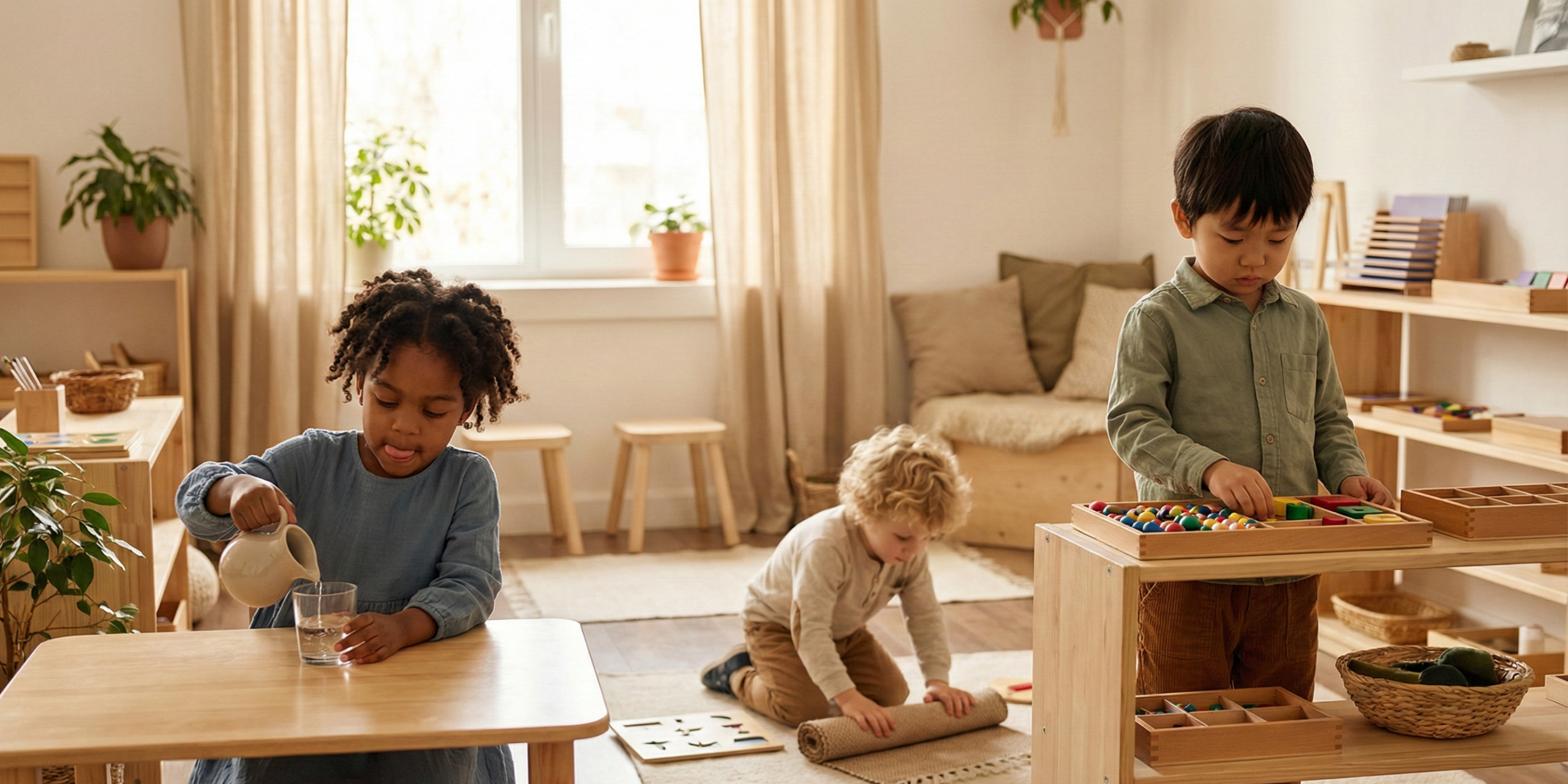
Young children naturally want to participate in everyday activities. They may want to pour their own water, put away materials, choose an activity, wash their hands, or help care for their surroundings.
When adults provide opportunities to practice these tasks instead of immediately doing everything for children, young learners begin discovering what they are capable of accomplishing.
At Montessori Reggio Academy, independence is incorporated into the classroom experience through accessible materials, practical-life activities, self-care routines, and opportunities for children to make age-appropriate choices. The academy’s programs in Sugar Land and Katy emphasize individualized, hands-on learning alongside independence and personal responsibility.
These seemingly simple experiences can prepare children for school routines while also building useful everyday skills.
Communication Skills Begin Early
Language is essential for nearly every part of a child’s life.
Children use communication to express needs, ask questions, develop friendships, understand directions, and share ideas. As they grow, these same abilities support reading, writing, classroom participation, and problem-solving.
A strong Early Childhood Education program creates a language-rich environment throughout the day.
Teachers can encourage communication by reading stories, singing songs, naming objects, discussing activities, asking open-ended questions, and allowing children time to respond.
Montessori Reggio Academy’s early childhood programming incorporates language development through conversation, music, object naming, pictures, sign language, and multilingual experiences.
Instead of treating language as a separate subject, communication becomes part of children’s everyday experiences.
Social Experiences Teach Children How to Work With Others
Early education also provides children with regular opportunities to interact with peers.
Young children are still learning how to share spaces, wait for turns, communicate preferences, listen to other people, and handle disagreements.
These skills require practice.
For example, two children may want the same classroom material. With appropriate teacher guidance, they can gradually learn to communicate what they want and find a solution instead of immediately becoming frustrated.
Group projects and classroom activities can also teach children how to cooperate toward a shared goal.
The Montessori Reggio Academy model includes individual and small-group learning, with social development supported through structured interactions, role modeling, practical-life experiences, and guided problem-solving.
Those experiences can prepare children for future classrooms as well as everyday relationships.
Hands-On Activities Strengthen Problem-Solving
Children often understand concepts more effectively when they can experience them directly.
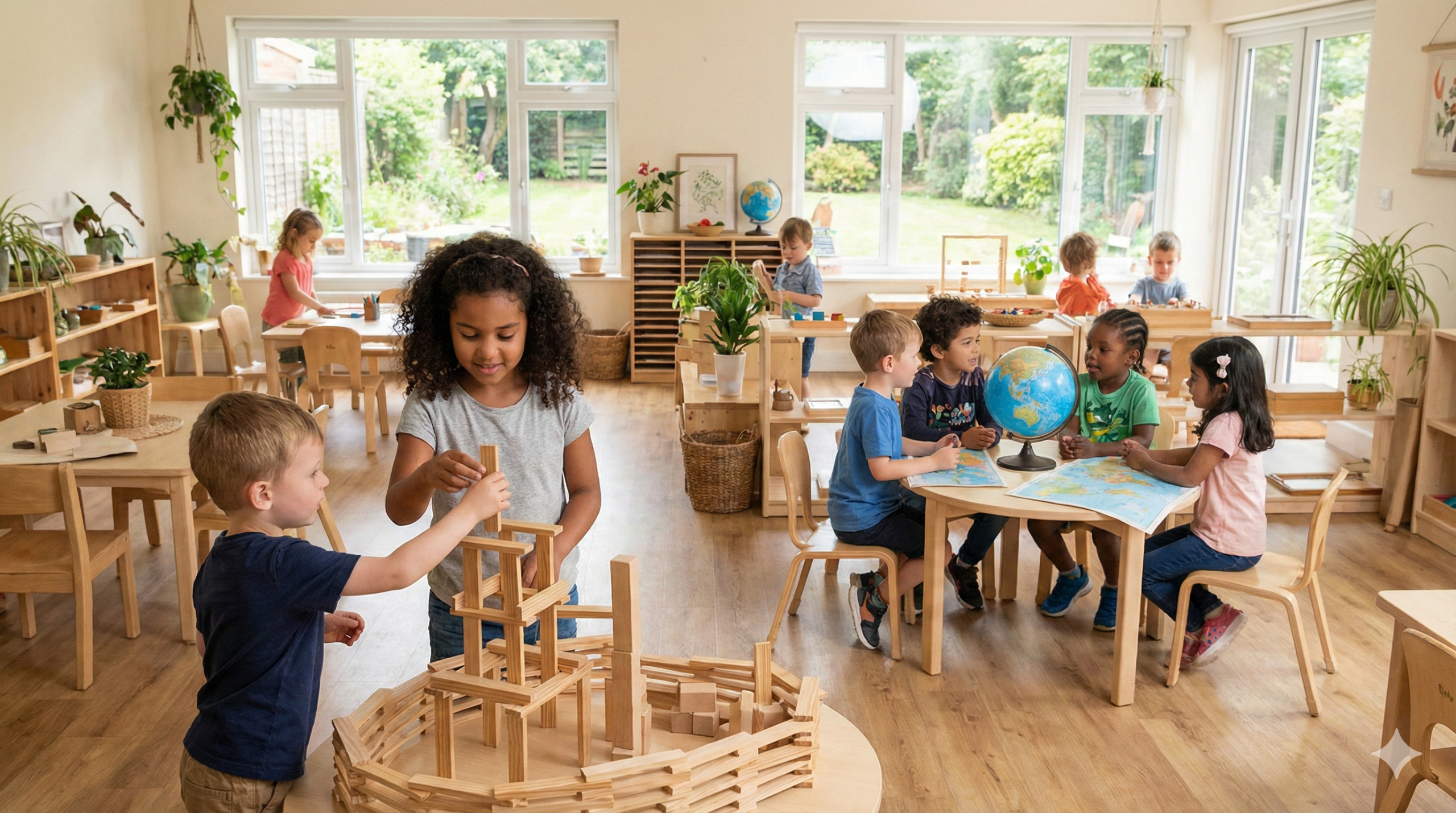
Imagine a child trying to build a tower. The first attempt falls. The child changes the base and tries again.
Although the activity may appear to be simple play, the child is experimenting with balance, cause and effect, planning, persistence, and problem-solving.
Early learning environments can provide many similar opportunities through blocks, puzzles, art, sensory materials, science investigations, practical tasks, and STEAM projects.
Montessori Reggio Academy combines Montessori and Reggio Emilia approaches with hands-on projects and activities. Its Katy program specifically incorporates project-based exploration, practical-life experiences, STEAM integration, and guided instruction to encourage critical thinking and problem-solving.
Learning becomes something children actively participate in rather than information they simply receive.
Fine Motor Skills Prepare Children for Everyday Tasks
Small-muscle coordination is another important part of early development.
Children rely on fine motor abilities when they hold a pencil, turn pages, use eating utensils, button clothing, build with small objects, and eventually write.
Early childhood classrooms can strengthen these skills through activities involving grasping, pouring, sorting, drawing, transferring objects, manipulating learning materials, and using child-appropriate tools.
The benefit extends beyond handwriting preparation.
As children’s coordination improves, many everyday tasks become easier. Increased physical capability can also strengthen independence because children need less adult assistance with age-appropriate activities.
Children Learn How to Manage Emotions
School readiness includes emotional development too.
A young child may understand exactly what they want but not yet know how to communicate frustration appropriately. Early educators can help children recognize emotions and gradually develop more effective ways to respond.
A teacher might acknowledge that a child is disappointed, provide language for the feeling, and help the child think about what to do next.
Over time, children can develop strategies such as asking for help, using words to explain a problem, waiting briefly, or trying a difficult task again.
These abilities are useful in school, but their importance extends far beyond the classroom. Emotional awareness supports friendships, family relationships, teamwork, and everyday problem-solving.
Curiosity Builds Motivation to Learn
Young children ask questions because they genuinely want to understand the world.
Why do leaves fall? What happens when colors are mixed? Why does one object float while another sinks?
High-quality Early Childhood Education protects that curiosity rather than making learning entirely dependent on memorization.
Teachers can turn questions into investigations, allowing children to make predictions, explore materials, observe outcomes, and discuss their discoveries.
Montessori Reggio Academy describes its educational approach as encouraging students to explore, question, and develop their potential through child-centered learning. Its Sugar Land program also emphasizes self-paced exploration and encourages children to freely express their thoughts and ideas.
Children who view learning as discovery may be more willing to approach unfamiliar challenges with interest rather than hesitation.
Responsibility Develops Through Everyday Routines
Responsibility doesn’t suddenly begin when children enter elementary school.
It can develop through small daily experiences.
Putting materials back after an activity, caring for classroom belongings, completing a task before moving on, and participating in cleanup all help children understand that their actions contribute to their environment.
In Montessori-inspired classrooms, the physical space itself is often designed to encourage this participation.
Montessori Reggio Academy’s Sugar Land classrooms use child-sized furnishings and accessible materials while teachers guide children in organization, caring for classroom resources, and cleaning up after themselves.
These routines can gradually help children develop organization and personal responsibility.
Early Education Supports the Whole Child
Parents understandably want children to enter kindergarten with academic skills, but readiness is broader than knowing letters, shapes, or numbers.
A child may also need to:
- Listen and communicate effectively
- Follow classroom routines
- Work independently for appropriate periods
- Cooperate with peers
- Ask for assistance
- Manage belongings
- Approach unfamiliar activities
- Continue trying when something is challenging
These abilities develop through repeated experiences rather than a single lesson.
A comprehensive early education program therefore considers academic, social, emotional, language, physical, and practical development together.
Early Childhood Education in Sugar Land and Katy
Families across Texas have different priorities when selecting a preschool or early childhood program. Some prioritize individualized learning, while others value language opportunities, hands-on experiences, independence, or continuity into later grades.
Montessori Reggio Academy provides early childhood education through campuses serving both Sugar Land and Katy families. Its current locations include a Sugar Land preschool campus, Sugar Land Cambridge Early Years Center, Sugar Land elementary campus, Katy Main Campus, and Katy at Cinco Ranch Campus.
Across its programs, the academy combines Montessori principles with Reggio Emilia-inspired learning and emphasizes exploration, individualized progress, practical skills, and child-centered education.
Building Skills That Extend Beyond School
The benefits of early learning are not limited to preparing children for their next classroom.
When children learn to communicate, make decisions, cooperate, solve problems, manage emotions, care for materials, and complete tasks independently, they are developing abilities that can be useful throughout daily life.
Early childhood should be a time when children discover that learning is meaningful and that they are capable participants in it.
For families in Sugar Land, Katy, and other Texas communities, choosing an early education environment that balances academic development with independence, curiosity, creativity, and social growth can provide children with a strong beginning.
The goal is not simply to prepare children for school. It is to help them develop the confidence and skills to approach school—and everyday life—with curiosity, responsibility, and a desire to keep learning.