The Pre-K years are an exciting transition between early childhood and the more structured learning children will encounter as they move toward kindergarten and elementary school. During this stage, children are rapidly expanding their vocabulary, developing friendships, becoming more independent, and discovering how rewarding it can be to solve problems on their own.
A quality Pre-K Program should support all of these areas rather than concentrating exclusively on academics. While early reading and mathematics are important, children also benefit from learning how to communicate, manage everyday routines, collaborate with classmates, think critically, and approach new experiences with confidence.
For families in Sugar Land, Katy, and surrounding Texas communities, understanding what children should experience in Pre-K can make it easier to evaluate different educational options and choose an environment that prepares children for both school and everyday life.
Early Language and Literacy Skills
Language development is an important component of any strong Pre-K School.
At this age, children should have frequent opportunities to participate in conversations, listen to stories, ask questions, learn new vocabulary, and express their own ideas.
Early literacy experiences may also introduce children to letter recognition, sounds, storytelling, sequencing, and the connection between spoken and written language.
However, literacy doesn’t have to come exclusively from worksheets.
Children can develop language while discussing a science experiment, describing artwork, listening to a teacher read aloud, or talking with classmates during collaborative activities.
At Montessori Reggio Academy, language is incorporated into the broader learning experience. Its Primary program for children ages three to six includes reading comprehension and communication development within a multilingual environment that incorporates English, Spanish, Mandarin, and American Sign Language.
A Strong Foundation in Mathematics
A quality Pre-K Program should also introduce mathematical thinking in ways young children can understand.
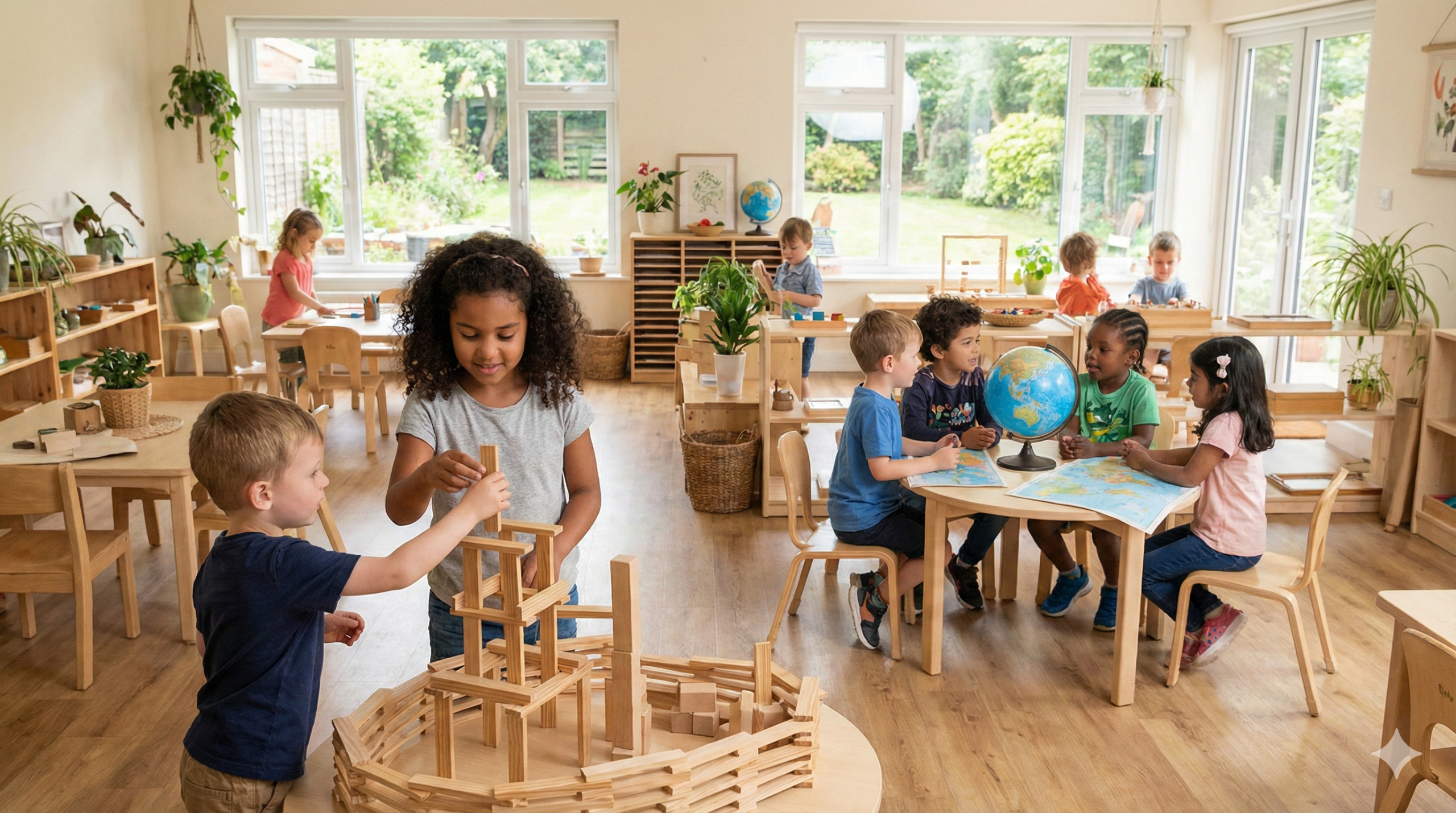
Children can explore numbers, quantities, patterns, shapes, measurement, sorting, and comparisons through hands-on activities.
For example, arranging objects from smallest to largest involves mathematical reasoning. Dividing materials between classmates introduces quantity. Building with geometric pieces can strengthen children’s understanding of shapes and spatial relationships.
Montessori Reggio Academy’s Primary curriculum includes number identification, mathematical concepts, geometry, and other academic milestones while allowing children to progress at an individually appropriate pace.
The objective should be deeper understanding rather than simply memorizing answers.
Independence and Practical Life Skills
Some of the most important lessons children learn during Pre-K may not look academic at all.
Children preparing for kindergarten benefit from knowing how to manage age-appropriate responsibilities independently.
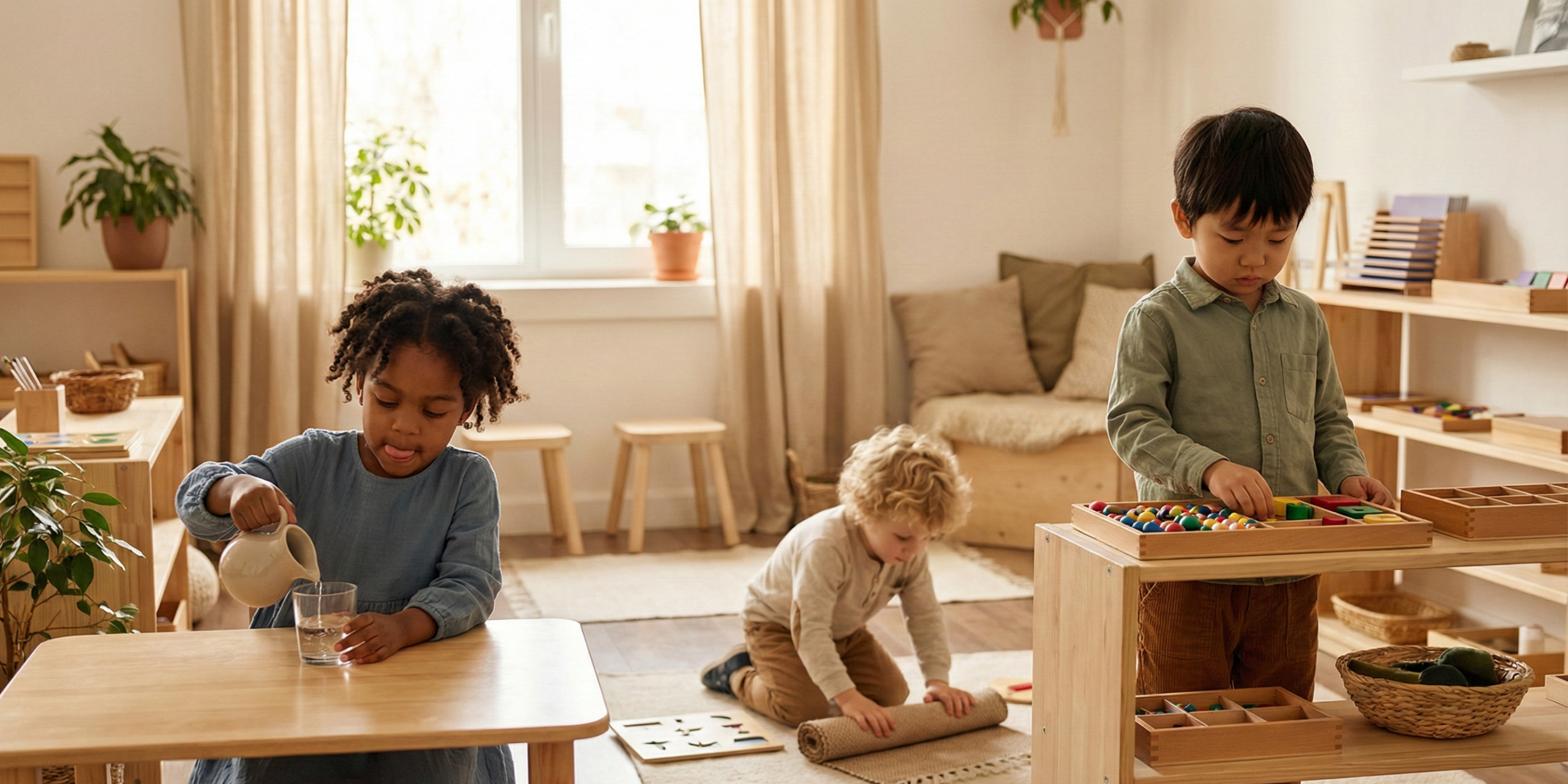
That could include putting away materials, organizing belongings, dressing themselves, cleaning up after an activity, preparing simple foods, or taking responsibility for classroom routines.
Practical activities help children develop coordination and concentration while strengthening their sense of capability.
Montessori Reggio Academy incorporates practical-life experiences throughout its Montessori approach. Its younger programs introduce activities such as pouring, dressing, cleaning, preparing food, and caring for classroom materials as children become increasingly independent.
These abilities are valuable in school, but they are equally important in everyday life.
Social Skills and Cooperation
A successful transition into kindergarten requires more than academic preparation. Children also need experience functioning as part of a classroom community.
Pre-K provides regular opportunities to practice:
- Listening to others
- Taking turns
- Sharing classroom spaces
- Expressing preferences respectfully
- Participating in group activities
- Cooperating on projects
- Working through minor disagreements
Teachers play an important role in guiding these interactions.
Rather than solving every conflict for children, educators can help them explain what happened, consider another person’s perspective, and think about possible solutions.
At Montessori Reggio Academy, students work both individually and in small groups, and the academy’s Primary program incorporates social interactions, communication, task attention, following directions, and life skills alongside academics.
Emotional Awareness and Self-Regulation
Pre-K children experience strong emotions, and they are still learning what to do with them.
A quality Pre-K School should help children identify feelings and develop appropriate strategies for responding to frustration, disappointment, excitement, or conflict.
A teacher might help a child put an emotion into words, encourage them to ask for assistance, or give them time to calm down before solving a problem.
These experiences gradually build self-regulation.
Children don’t need to enter kindergarten capable of handling every difficult situation independently. They should, however, be developing tools for communicating emotions and responding constructively when something doesn’t go according to plan.
Curiosity, Science, and Discovery
Pre-K children are naturally curious.
They want to know why shadows move, how plants grow, what insects eat, and what will happen when different materials are combined.
A quality program uses this curiosity as a starting point for learning.
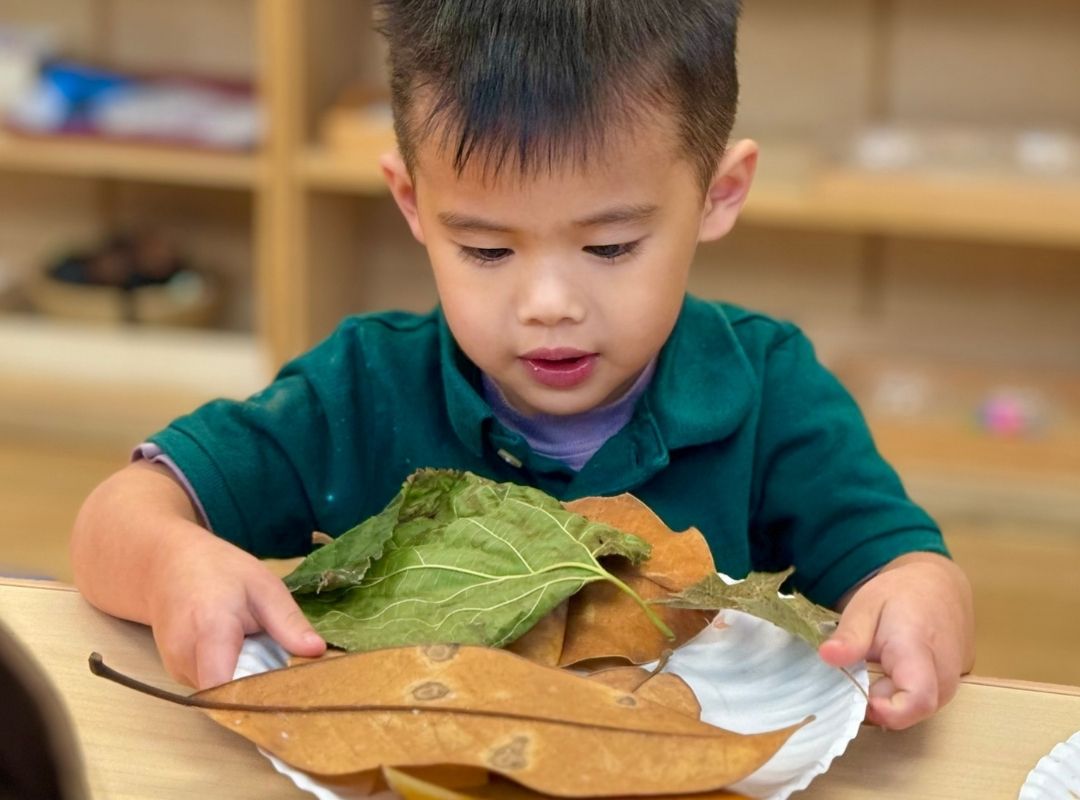
Simple experiments, nature observations, sensory activities, cooking projects, and classroom investigations can introduce scientific thinking without making learning feel overly formal.
Montessori Reggio Academy combines Montessori education with Reggio Emilia-inspired learning. Its Katy preschool program includes monthly themes with hands-on experiences such as science experiments, sensory activities, cooking, and art projects.
Children aren’t merely learning scientific facts during these experiences. They are practicing how to observe, predict, question, and investigate.
Problem-Solving and Critical Thinking
Children need opportunities to think instead of always being told exactly what to do.
Imagine a child building a bridge from classroom materials. If the bridge collapses, the teacher could immediately show the child the correct solution—or encourage the child to investigate why it fell.
The second approach creates an opportunity for problem-solving.
Questions such as “What could you change?” or “What do you think will happen if you try this?” encourage children to analyze situations and test ideas.
Montessori Reggio Academy describes its curriculum as individually paced and supportive, with hands-on projects designed to help children question, think critically, and take greater responsibility for their learning.
Developing these thinking habits can prepare children for increasingly complex academic challenges.
Fine and Gross Motor Development
Physical development remains important throughout the Pre-K years.
Fine motor activities strengthen the small muscles children will use for writing, drawing, fastening clothing, manipulating objects, and using utensils.
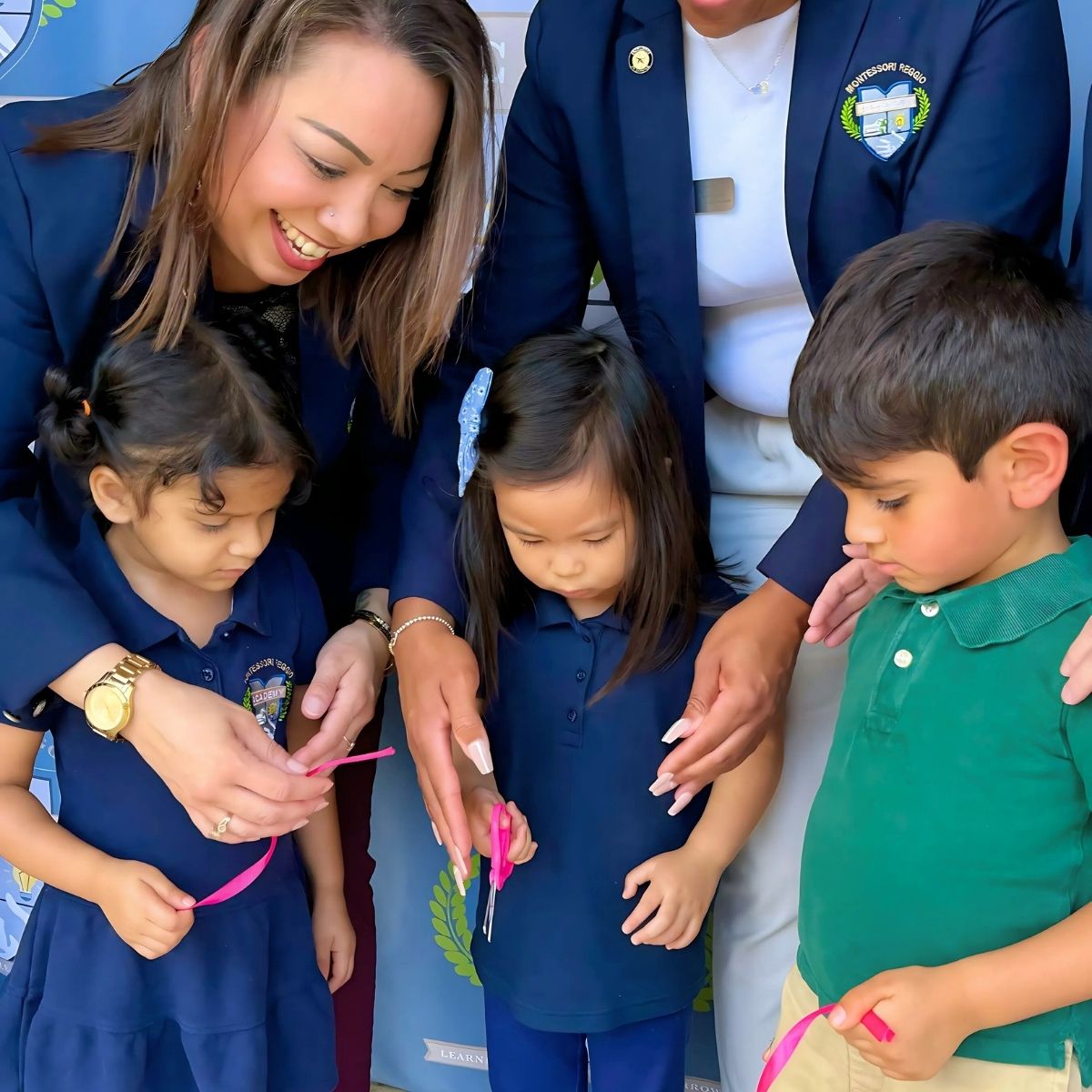
Activities might include cutting, painting, building, transferring small objects, tracing, or working with Montessori materials.
Gross motor experiences are important as well. Running, balancing, climbing, dancing, and outdoor play support coordination and physical confidence.
A comprehensive Pre-K Program recognizes that children’s minds and bodies develop together.
Creativity and Self-Expression
Children should also have opportunities to communicate ideas in ways that extend beyond spoken or written language.
Art, music, movement, dramatic play, construction, and imaginative projects encourage children to experiment and express themselves.
Creative activities aren’t simply breaks from academics. They can involve planning, decision-making, fine motor coordination, communication, and problem-solving.
Montessori Reggio Academy’s educational model combines Montessori learning with the Reggio Emilia approach, which emphasizes exploration, discovery, creativity, responsibility, and children’s active participation in learning.
Confidence to Attempt Challenging Tasks
One of the most valuable things children can learn before kindergarten is that difficulty doesn’t mean they should stop trying.
A child completing a complicated puzzle, learning to write a letter, or mastering a practical task may need multiple attempts.
Teachers can encourage persistence without completing the activity for the child.
When children eventually succeed, they experience the satisfaction of knowing that effort made a difference.
This confidence can influence how they approach future challenges. Instead of immediately thinking, “I can’t do this,” children can gradually learn to think, “I haven’t figured it out yet.”
Choosing a Pre-K School in Sugar Land or Katy
Families searching for a Pre-K School in Sugar Land or Katy, Texas should look beyond attractive classrooms and long lists of activities.
Ask how children actually spend their day. Find out how the curriculum addresses academics, independence, creativity, social-emotional development, practical skills, and individual differences.
Montessori Reggio Academy provides early childhood education for families in both Sugar Land and Katy. Its current locations include its Sugar Land campus, Katy campus, and Katy at Cinco Ranch campus, with programs based on Montessori and Reggio Emilia educational principles.
Its Sugar Land educational pathway also includes a Cambridge Early Years program for children ages three to six, combining Montessori and Reggio Emilia approaches with inquiry, creativity, and foundational learning.
Preparing Children for More Than Kindergarten
A strong Pre-K Program should certainly help children prepare academically for kindergarten, but its purpose can be much broader.
Children should leave Pre-K with growing independence, stronger communication skills, curiosity, social awareness, problem-solving abilities, and confidence in their capacity to learn.
For families in Sugar Land, Katy, and throughout Texas, choosing a program that develops the whole child can provide a meaningful foundation for the years ahead.
When children learn that questions are welcome, challenges can be solved, and they are capable of doing more for themselves, they gain skills that extend far beyond their first day of kindergarten.