During the first years of life, children learn about the world through movement, exploration, imagination, and interaction. Whether stacking blocks, pretending to cook, exploring nature, or solving a simple puzzle, every playful experience creates opportunities for growth.
Play is much more than entertainment. It is an important part of Early Childhood development that helps children strengthen cognitive abilities, improve communication, develop motor skills, and build meaningful relationships.
Research on child development shows that playful experiences can support the development of neural connections involved in learning, memory, attention, and problem-solving.
At Montessori Reggio Academy, hands-on exploration is an essential part of the educational experience. By combining Montessori principles, Reggio Emilia-inspired activities, and developmentally appropriate learning opportunities, the academy encourages children to discover new concepts through purposeful play.
Understanding how play supports brain development can help parents recognize the educational value of everyday childhood activities.
Why Play Matters for Brain Development
The human brain develops rapidly during early childhood. As children interact with their surroundings, they gain experiences that help shape developing neural pathways.
Play provides opportunities to practice important abilities repeatedly in different situations.
For example, a toddler stacking blocks practices coordination and spatial awareness. A preschooler participating in pretend play uses imagination, memory, and communication.
These experiences engage multiple areas of development simultaneously.
Play also allows children to experiment without the pressure of finding one correct answer.
When children feel comfortable exploring, making mistakes, and trying again, they develop confidence and persistence.
A nurturing environment with supportive adults helps make these experiences meaningful.
1. Building Problem-Solving Skills Through Hands-On Play
Problem-solving begins with simple childhood challenges.
A child may wonder how to fit a puzzle piece into place or keep a block tower from falling.
Through trial and error, children discover relationships between objects and actions.
They begin recognizing patterns, testing possibilities, and adjusting their approaches.
At Montessori Reggio Academy, children explore age-appropriate learning materials designed to encourage independent thinking.
Teachers guide children through discovery rather than immediately providing every solution.
This approach helps children develop patience, concentration, and confidence when facing unfamiliar challenges.
2. Strengthening Memory and Attention
Many play-based activities require children to remember information and maintain focus.
Matching games, puzzles, sorting activities, and simple memory games provide opportunities to practice these skills.
For example, remembering where a picture card is located requires children to recall information while paying attention to their surroundings.
Similarly, completing a construction project involves remembering previous steps and planning what to do next.
During early childhood, these abilities are still developing.
Short, engaging activities allow children to practice concentration without unnecessary pressure.
Montessori-inspired classrooms support this process by providing organized learning spaces and opportunities for uninterrupted, purposeful activity.
3. Encouraging Language and Communication Development
Language development is closely connected to play.
When children participate in storytelling, pretend play, singing, and group activities, they encounter opportunities to learn new words and express ideas.
A pretend grocery store, for example, introduces vocabulary related to food, quantities, money, and everyday conversations.
Children may practice asking questions, explaining preferences, and responding to others.
At Montessori Reggio Academy, communication development is supported through hands-on learning, collaborative projects, and language-rich classroom experiences.
The academy also incorporates Spanish and Mandarin language learning into its educational approach, creating additional opportunities for children to experience different forms of communication.
These activities help children develop vocabulary, listening skills, and confidence when expressing themselves.
4. Developing Social and Emotional Skills Through Group Play
Play provides valuable opportunities for children to understand relationships and emotions.
When children participate in group activities, they practice sharing materials, taking turns, cooperating, and resolving disagreements.
For example, building a structure with classmates requires communication and teamwork.
Children may need to discuss ideas, negotiate responsibilities, and consider different perspectives.
These experiences support empathy, emotional awareness, and self-regulation.
Teachers can help children recognize feelings and practice appropriate responses when challenges arise.
At Montessori Reggio Academy, collaborative learning is an important part of the Reggio Emilia-inspired approach, encouraging children to develop positive relationships while exploring shared interests.
5. Improving Fine and Gross Motor Skills
Physical movement plays an important role in early childhood development.
Fine motor skills involve smaller movements, such as grasping objects, manipulating tools, and coordinating fingers.
Gross motor skills involve larger movements, including walking, jumping, balancing, and climbing.
Play-based activities provide opportunities to strengthen both.
Drawing, threading large beads, using building materials, and completing practical-life activities encourage fine motor coordination.
Outdoor games, dancing, obstacle courses, and playground activities support larger muscle movements.
These physical experiences also help children develop body awareness and confidence.
Montessori Reggio Academy incorporates practical-life and movement activities that support coordination, independence, and physical development.
6. Supporting Creativity and Imagination
Imaginative play allows children to explore possibilities beyond their immediate surroundings.
A cardboard box might become a spaceship, while a collection of blocks could represent an entire city.
These experiences encourage flexible thinking and creative expression.
Children learn that materials can serve different purposes and that problems may have multiple solutions.
Art, music, dramatic play, and open-ended construction activities provide opportunities to express original ideas.
The Reggio Emilia philosophy recognizes creativity as an important part of children’s learning.
At Montessori Reggio Academy, creative exploration complements academic development through artistic activities and collaborative investigations.
7. Introducing Early Mathematics and Science
Play creates natural opportunities to introduce mathematical and scientific concepts.
Children explore counting, shapes, patterns, measurement, and comparison through everyday activities.
Sorting objects by size or color introduces classification.
Building with blocks encourages spatial reasoning and an understanding of balance.
Water play can introduce concepts such as volume, movement, and cause and effect.
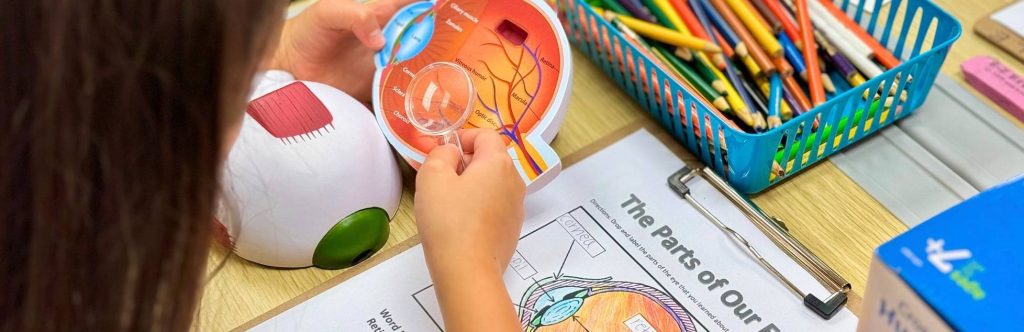
Simple science investigations also encourage children to ask questions and observe results.
Montessori Reggio Academy integrates science, technology, engineering, arts, and mathematics through its STEAM-focused curriculum.
Hands-on investigations help children connect academic concepts with experiences they can see and understand.
8. Encouraging Independence and Decision-Making
Children develop confidence when they have opportunities to make appropriate choices.
Selecting a learning activity, gathering materials, and completing a task can help children practice independence.
Montessori education emphasizes freedom within a prepared environment.
Children are encouraged to explore purposeful activities while teachers provide guidance based on individual developmental needs.
For example, a child might choose to work with counting materials, complete a puzzle, or participate in a practical-life activity.
Making these decisions encourages responsibility and self-directed learning.
Over time, children can develop greater confidence in their abilities and willingness to attempt new challenges.
How Parents Can Encourage Play-Based Learning at Home
Parents can support brain development through simple, everyday activities.
Expensive educational toys are not necessary.
Helpful activities include:
- Building towers with blocks
- Reading picture books together
- Playing matching and sorting games
- Creating pretend kitchens or stores
- Exploring plants and insects outdoors
- Singing songs with movements
- Drawing and painting
- Completing age-appropriate puzzles
The most important element is meaningful interaction.
Parents can ask open-ended questions, encourage experimentation, and allow children time to explore.
For example, instead of explaining how to build a tower immediately, ask, “What could make it stronger?”
These conversations encourage curiosity and problem-solving.
Children also benefit from unstructured playtime, when they can choose activities and use their imagination independently.
Play-Based Learning at Montessori Reggio Academy
Montessori Reggio Academy serves families in Sugar Land and Katy, Texas, through educational programs that emphasize individualized development and hands-on learning.
Its approach combines Montessori education, Reggio Emilia-inspired projects, and the Cambridge Early Years framework.
Children are encouraged to explore thoughtfully prepared environments, participate in collaborative investigations, and develop practical skills through meaningful activities.
The academy’s curriculum supports academic foundations alongside creativity, independence, communication, and social-emotional growth.
By providing opportunities for purposeful play and self-directed discovery, Montessori Reggio Academy helps children develop abilities that support future learning.
Final Thoughts
Play is an essential part of healthy brain development during early childhood.
Through puzzles, storytelling, movement, creative activities, and hands-on exploration, children strengthen important abilities related to thinking, communication, coordination, and emotional development.
These experiences also encourage curiosity, confidence, and a positive relationship with learning.
At Montessori Reggio Academy, purposeful play is integrated into an educational philosophy that respects each child’s individual development.
By combining engaging activities with supportive guidance, families and educators can help children build a strong foundation for future academic and personal growth.