Why Winter Break Learning Matters for Young Children
Research consistently shows that young children thrive with consistent learning experiences, even during breaks. The key isn’t maintaining rigid academic schedules but rather creating opportunities for natural discovery and exploration that align with your child’s interests and developmental needs.
At our Katy location, we see children return from thoughtfully enriched winter breaks with enhanced creativity, stronger family connections, and renewed enthusiasm for classroom learning. The secret lies in understanding how to extend our Montessori Reggio Academy principles beyond school walls.
- Unhurried Exploration: Without the pressure of schedules, children can dive deeply into topics that captivate their interest.
- Family Learning Opportunities: Siblings and parents become learning partners in ways that classroom settings cannot replicate.
- Real-World Application: Home environments provide authentic contexts for practicing skills learned at school.
- Cultural and Seasonal Learning: Winter traditions offer rich opportunities for cultural exploration and seasonal science
Montessori-Inspired Activities for Winter Break
The Montessori method emphasizes independence, hands-on learning, and respect for the child’s natural development. These activities bring those principles into your Katy home:
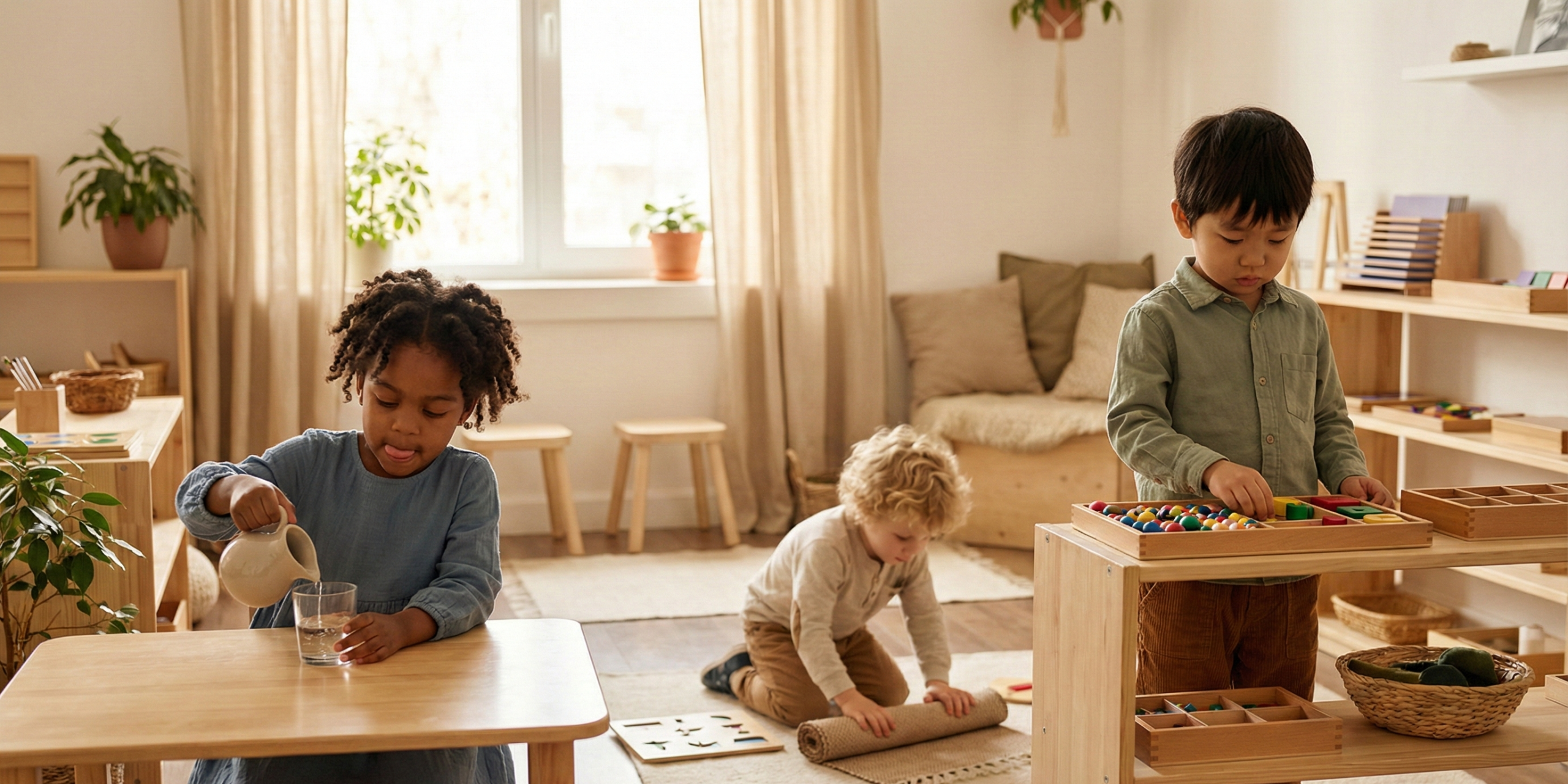
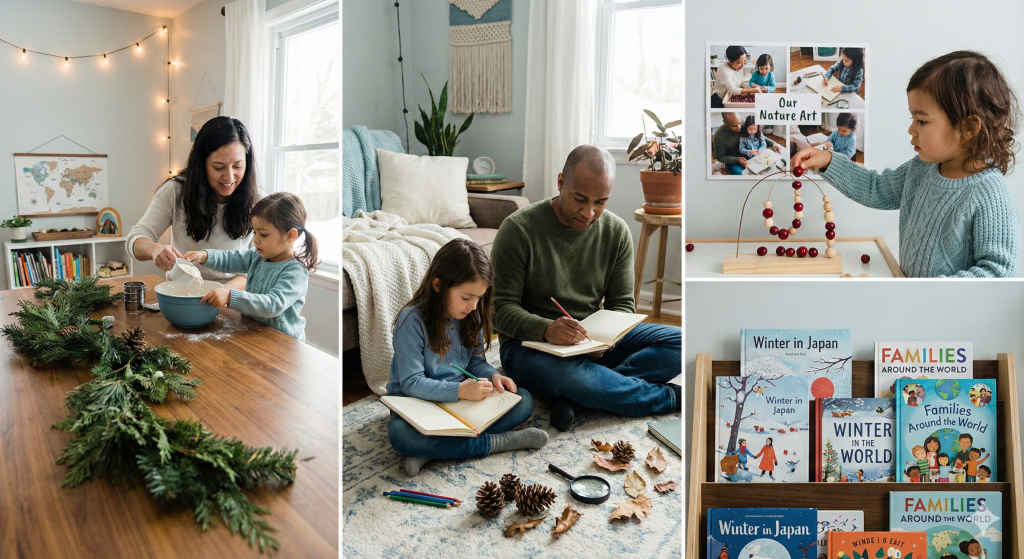
- Practical Life Skills During Holiday Preparations: Involve your child in real holiday preparations. Measuring ingredients for holiday baking develops mathematical concepts while building confidence. Setting the table for guests teaches sequencing, counting, and care for the environment. Wrapping gifts strengthens fine motor skills and spatial reasoning.
- Seasonal Nature Study: Even in Katy’s mild winter, children can observe seasonal changes. Create a nature journal documenting temperature variations, changes in plant life, and animal behaviors. Collect interesting seeds, leaves, or stones for sorting and classification activities.
- Independence Projects: Choose one new self-care skill for your child to master during break. This might include learning to fold fitted sheets, organizing their book collection, or preparing simple snacks independently. These activities build confidence and practical life skills.
- Language Development Through Storytelling: Create family story books about winter break adventures. Your child can dictate stories while you write, then illustrate their tales. This develops language skills, sequencing abilities, and creative expression.
Reggio Emilia-Inspired Winter Discoveries
The Reggio Emilia approach views children as capable researchers and artists. These activities honor that perspective:
- Light and Shadow Explorations: Winter’s shorter days create perfect conditions for studying light and shadow. Use flashlights, candles (safely supervised), and natural light to create shadow puppet shows, explore how light travels, and observe how shadows change throughout the day.
- Documentation Projects: Help your child document their winter break experiences through photography, drawings, and observations. Create a visual journal combining their artwork with photographs of family activities, interesting discoveries, and questions they develop.
- Community Connections: Visit local Katy businesses, parks, and cultural sites as researchers. Encourage your child to ask questions about how things work, who does different jobs, and what makes your community special. Document these discoveries together.
- Material Investigations: Provide open-ended materials for exploration: interesting textures, natural objects, recycled materials for building and creating. The focus isn’t on creating specific products but on the process of investigation and discovery.
Cambridge Early Years Global Perspective Activities
Our Cambridge Early Years program emphasizes global awareness and inquiry-based learning:
- Cultural Exploration: Research winter celebrations from around the world. Create simple crafts, taste traditional foods, or learn basic greetings in different languages. This builds global citizenship and cultural appreciation.
- Scientific Inquiries: Follow your child’s natural questions about winter phenomena. Why do some trees lose leaves while others stay green? How do animals stay warm? Turn these questions into simple investigations using books, online resources, and hands-on exploration.
- Mathematical Thinking: Use holiday and winter activities for mathematical exploration. Count ornaments by color, create patterns with gift wrap, measure and compare the heights of snowmen (or sand castles if visiting warmer climates), and estimate quantities in holiday baking.
- Communication Skills: Encourage your child to share discoveries with grandparents, friends, or family members through video calls, drawings, or simple presentations. This develops confidence in communication and reflection skills.
Creating Learning-Rich Environments at Home
Transform your Katy home into an extension of our MRA learning environment:
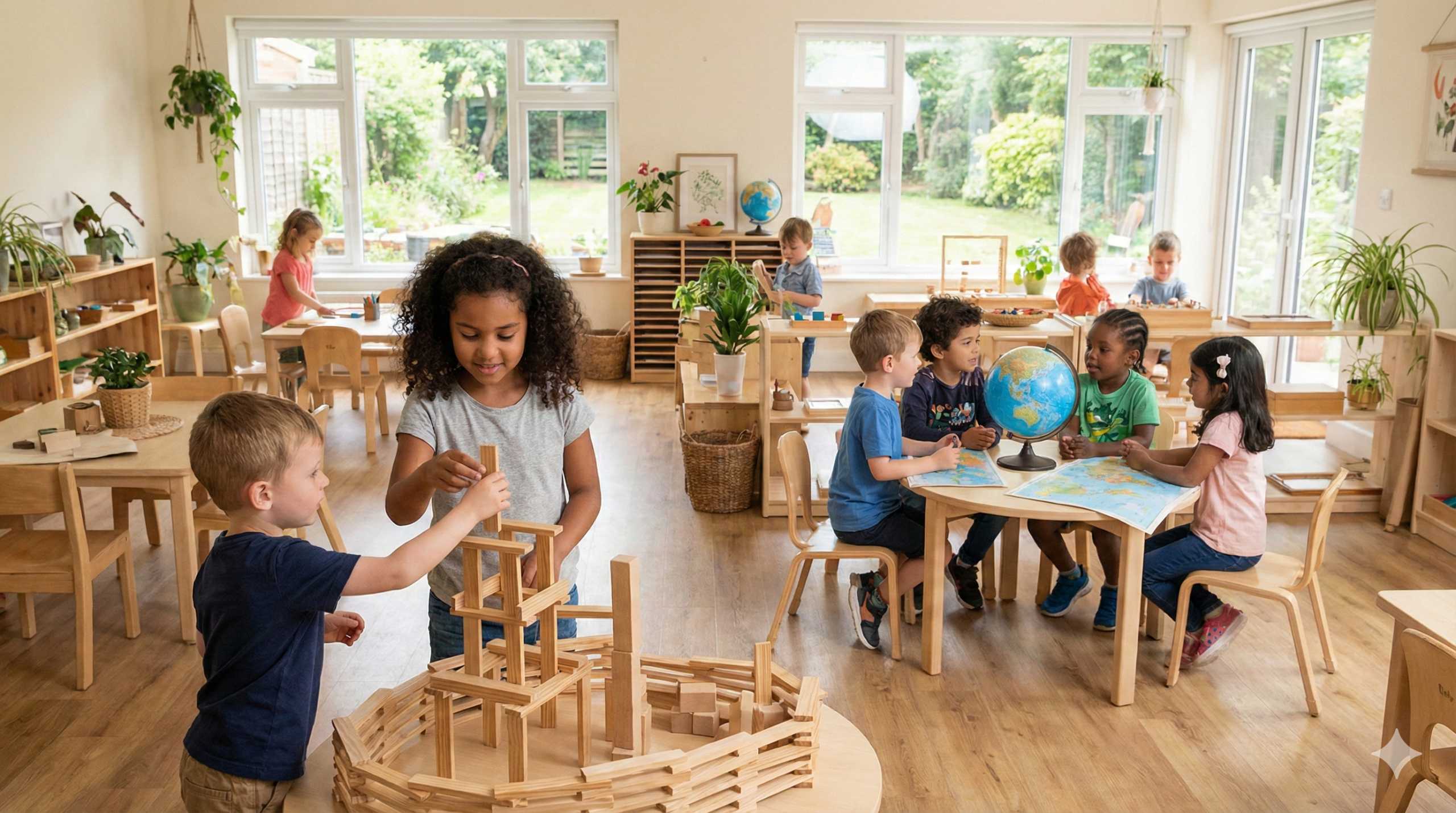
- Designated Learning Spaces: Create a quiet corner with books, art supplies, and interesting objects for exploration. This doesn’t require expensive materials—a low table, good lighting, and rotating selection of engaging materials works perfectly.
- Natural Materials: Incorporate natural elements into play and learning: shells, stones, wooden blocks, plants, and seasonal items. These materials invite open-ended exploration and connect children to the natural world.
- Documentation Displays: Create space to display your child’s artwork, discoveries, and projects. This shows respect for their learning and encourages continued exploration and pride in their work.
Balancing Structure and Freedom
One advantage of our Katy campus approach is teaching children to balance structure with creative freedom. Apply this at home:
- Flexible Routines: Maintain some routine elements (morning activities, quiet time, bedtime rituals) while allowing flexibility for spontaneous discoveries and family activities.
- Child-Led Scheduling: Let your child choose when to engage in different activities based on their interests and energy levels. This builds self-regulation skills and intrinsic motivation.
- Quality Over Quantity: Focus on meaningful engagement rather than completing multiple activities. One deeply explored interest provides more learning value than several superficial activities.
Connecting Winter Break Learning to School
Help your child make connections between home learning and our Katy campus experiences:
- Share Discoveries: Encourage your child to bring photos, artifacts, or stories from winter break to share with their class when school resumes.
- Apply School Skills: Use problem-solving strategies, social skills, and academic concepts from school in home situations, reinforcing their learning.
- Maintain Friendships: Arrange playdates with MRA classmates to maintain social connections and create opportunities for collaborative learning.
Preparing for a Smooth Return
As winter break concludes, help your child transition back to school routine:
- Gradual Schedule Adjustment: Begin returning to school-time schedules a few days before classes resume.
- Reflection Conversations: Talk about favorite winter break memories and what they’re excited to share with teachers and friends.
- Goal Setting: Help your child identify new interests or questions they want to explore when school resumes.
Extend Learning Beyond Winter Break
The learning strategies that work during winter break can enhance your child’s development throughout the year. Regular family learning adventures, home environment enrichment, and respect for your child’s natural curiosity support their growth alongside our classroom education.
At Montessori Reggio Academy’s Katy campus, we believe that learning is a collaborative journey between school and home. When families embrace this partnership, children develop stronger foundations, greater confidence, and deeper joy in learning.
Your child’s winter break can become a time of growth, discovery, and family connection while maintaining the educational momentum they’ve built at MRA. The key lies in viewing everyday experiences through the lens of learning opportunities and trusting in your child’s natural capacity for wonder and discovery.
Ready to create enriching learning experiences at home? Connect with our Katy campus educators for personalized suggestions that align with your child’s interests and developmental goals. Together, we can ensure that learning continues to flourish throughout winter break and beyond.