What Makes Cambridge Early Years Different from Traditional Academic Preparation?
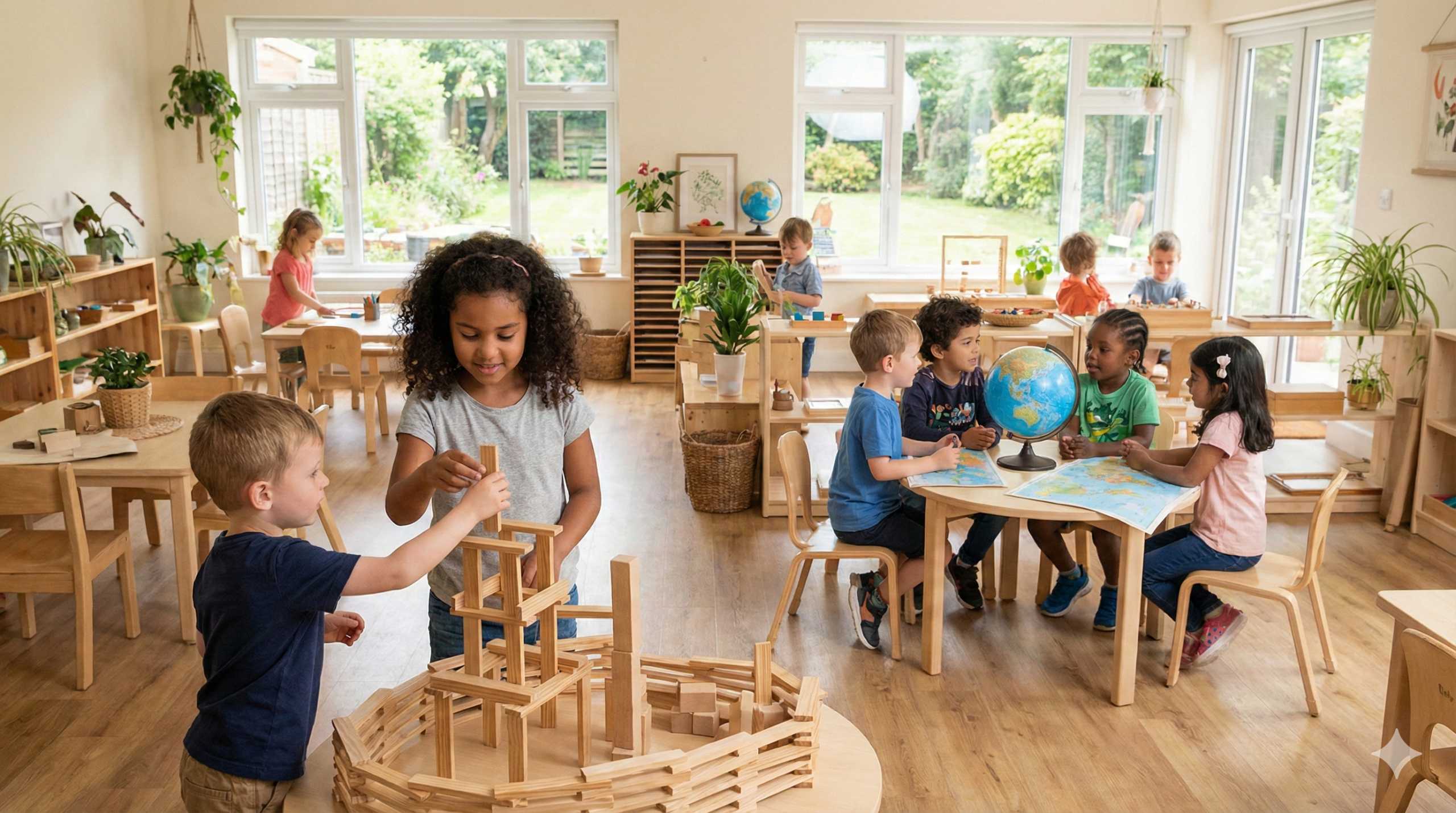
Unlike preschools that focus on rote memorization or worksheet-driven learning, Cambridge Early Years recognizes that young children learn best through exploration and questioning. This inquiry-based approach encourages children to ask “why,” “how,” and “what if” rather than simply accepting information.
- Communication and Language: Children develop sophisticated vocabulary and communication skills through meaningful conversations and storytelling.
- Physical Development: Fine and gross motor skills essential for writing and classroom participation.
- Personal, Social, and Emotional Development: Self-regulation skills that help children focus and learn effectively.
- Mathematics: Number sense, pattern recognition, and problem-solving through hands-on exploration.
- Understanding the World: Scientific thinking and cultural awareness that builds global citizenship.
- Expressive Arts and Design: Creative expression that enhances cognitive development.
How Does Inquiry-Based Learning Prepare Children for Academic Success?
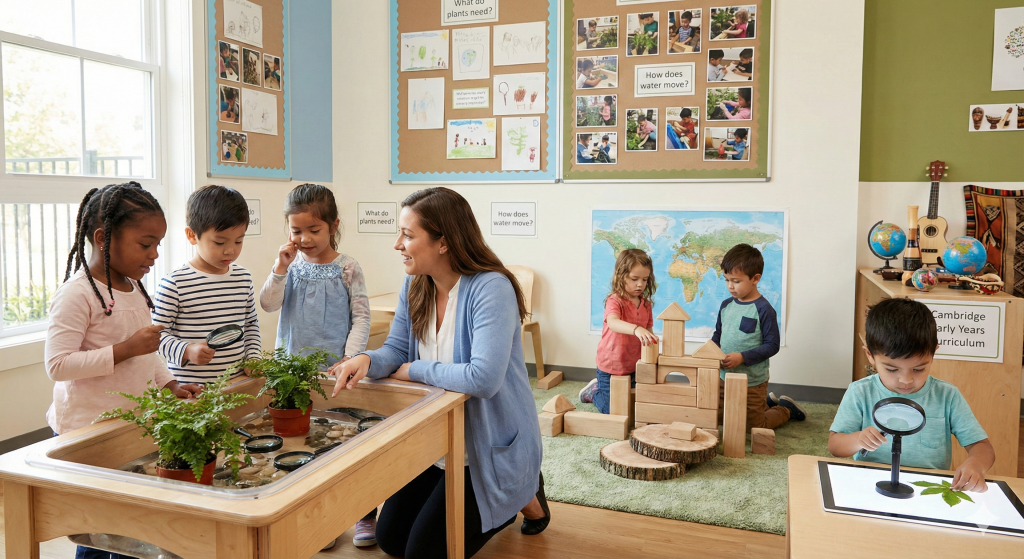
The power of inquiry-based learning lies in its ability to develop deep thinking skills rather than surface knowledge. When a child at our Katy campus asks, “Why do leaves change colors?” their teacher doesn’t simply provide an answer. Instead, they guide the child through observation, hypothesis formation, and investigation.
- Critical Thinking Development: Children learn to analyze information, make connections between ideas, and draw logical conclusions. These skills transfer directly to reading comprehension, mathematical problem-solving, and scientific reasoning in elementary school.
- Self-Directed Learning: Through child-led inquiries, students develop the confidence to tackle new challenges independently. This internal motivation becomes crucial when facing more complex academic content.
- Communication Skills: As children share their discoveries and questions with peers and teachers, they develop the verbal and written communication skills essential for classroom success.
- Resilience and Persistence: Inquiry-based learning teaches children that learning involves trial, error, and revision. This mindset helps them persist through challenging academic material later.
Real Results: Cambridge Early Years Success at MRA Katy
The effectiveness of Cambridge Early Years becomes clear when we track our graduates’ success in elementary school. Children from our Katy campus consistently demonstrate:
- Advanced Language Arts Skills: Our graduates enter kindergarten with rich vocabularies and strong phonemic awareness.
- Mathematical Reasoning: They approach math problems with confidence and creative thinking.
- Social-Emotional Readiness: They collaborate effectively and self-regulate during challenging tasks.
- Love of Learning: Perhaps most importantly, they maintain curiosity and enthusiasm for education.
One parent from our Katy location shared: “My daughter entered kindergarten reading above grade level, but more importantly, she approaches every new challenge with excitement rather than anxiety. The Cambridge Early Years program didn’t just teach her facts; it taught her how to learn.”
How MRA’s Unique Approach Enhances Cambridge Early Years
At our Katy campus, we don’t implement Cambridge Early Years in isolation. Our “trifecta approach” integrates Cambridge with Montessori and Reggio Emilia methodologies, creating an even more powerful learning environment.
- Montessori Contribution: The prepared environment and respect for individual developmental pace enhance Cambridge’s child-centered approach.
- Reggio Emilia Integration: Documentation and project-based learning deepen the inquiry process, making children’s thinking visible.
- Cambridge Framework: Provides the structured progression and global perspective that ensures comprehensive academic readiness.
Supporting Your Child’s Cambridge Early Years Journey at Home
The inquiry-based approach doesn’t end at school pickup. Parents can support their child’s academic development by:
- Encouraging Questions: When your child asks questions, resist the urge to provide immediate answers. Instead, explore possibilities together through books, experiments, or observations.
- Creating Investigation Opportunities: Simple activities like cooking, gardening, or building can become rich inquiry experiences when you ask open-ended questions.
- Reading Together: Choose books that spark questions and discussions rather than those that simply tell stories.
- Documenting Learning: Take photos or keep a journal of your child’s discoveries and questions, just as we do at school.
Preparing for the Future: Beyond Academic Readiness
While academic preparation is crucial, Cambridge Early Years at our Katy campus prepares children for something even more important: lifelong learning. In a rapidly changing world, the ability to ask good questions, think critically, and adapt to new situations matters more than memorized facts.
Schedule Your Visit to MRA’s Katy Campus
Seeing Cambridge Early Years in action provides the best understanding of its transformative power. During your visit to our Katy location, you’ll observe:
- Children engaged in authentic inquiries
- Teachers facilitating rather than directing learning
- A rich environment that supports exploration
- Documentation that makes learning visible
- The joy and confidence that comes from meaningful education
Ready to see how Cambridge Early Years can prepare your child for academic success? Schedule a tour of our Katy campus today and discover the difference that inquiry-based learning can make in your child’s educational journey.