Understanding Growth Mindset in Early Childhood
Growth mindset, pioneered by psychologist Carol Dweck, represents the understanding that our brains can grow and change through practice and effort. For young children, this translates into approaching learning with curiosity rather than fear, persistence rather than avoidance, and excitement rather than anxiety when facing new challenges.
Research consistently demonstrates that children with growth mindsets show greater academic achievement, increased motivation, and stronger emotional resilience. Perhaps most importantly, they develop a love of learning that extends far beyond their early years, serving as a foundation for lifelong success and fulfillment.
How Montessori Principles Foster Growth Mindset
Dr. Maria Montessori’s educational philosophy provides the foundational elements for developing growth mindset thinking in young children. The Montessori approach at our Katy location emphasizes several key principles that naturally support this developmental process.
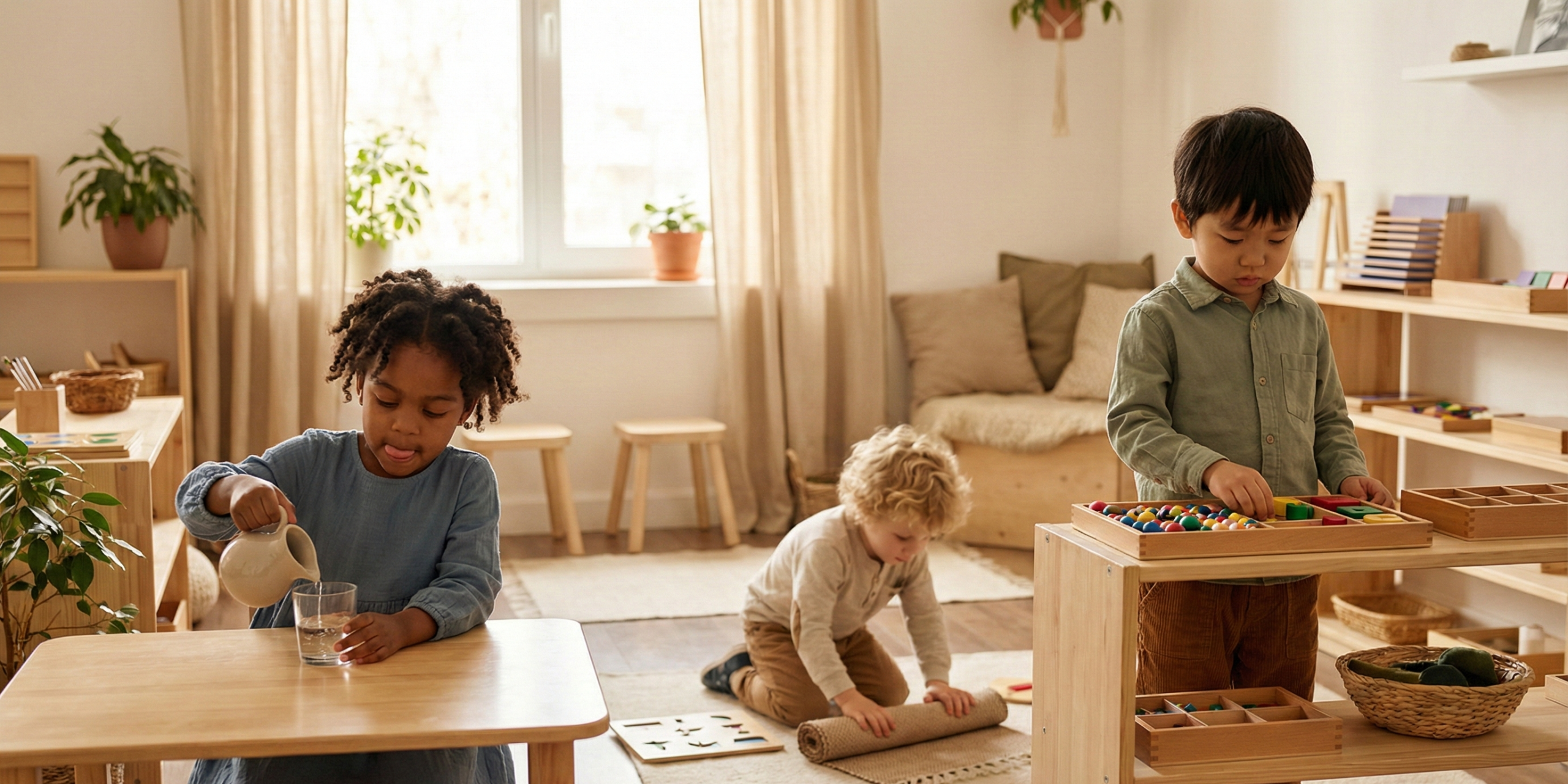
Freedom Within Structure: Children in our Montessori-inspired classrooms choose their own learning activities within a carefully prepared environment. This freedom of choice helps children understand that they have control over their learning journey, encouraging them to take ownership of both successes and challenges.
- Mixed-Age Classrooms: Our multi-age learning environments provide countless opportunities for children to see growth in action. Younger children observe older students who once struggled with tasks they now master, while older children develop confidence by helping younger peers. This natural mentorship creates a community where growth and progress are visible and celebrated daily.
- Process-Focused Learning: Montessori education emphasizes the journey of learning rather than just end products. Children learn to value effort, strategy, and improvement over simply getting the “right” answer. This process orientation is fundamental to developing a growth mindset.
- Intrinsic Motivation: Rather than relying on external rewards and punishments, our Montessori approach helps children find joy and satisfaction in the learning process itself. This intrinsic motivation supports long-term growth mindset development and academic success.
Reggio Emilia’s Contribution to Growth Mindset Development
The Reggio Emilia approach brings unique elements to growth mindset development through its emphasis on collaboration, documentation, and viewing children as capable researchers.
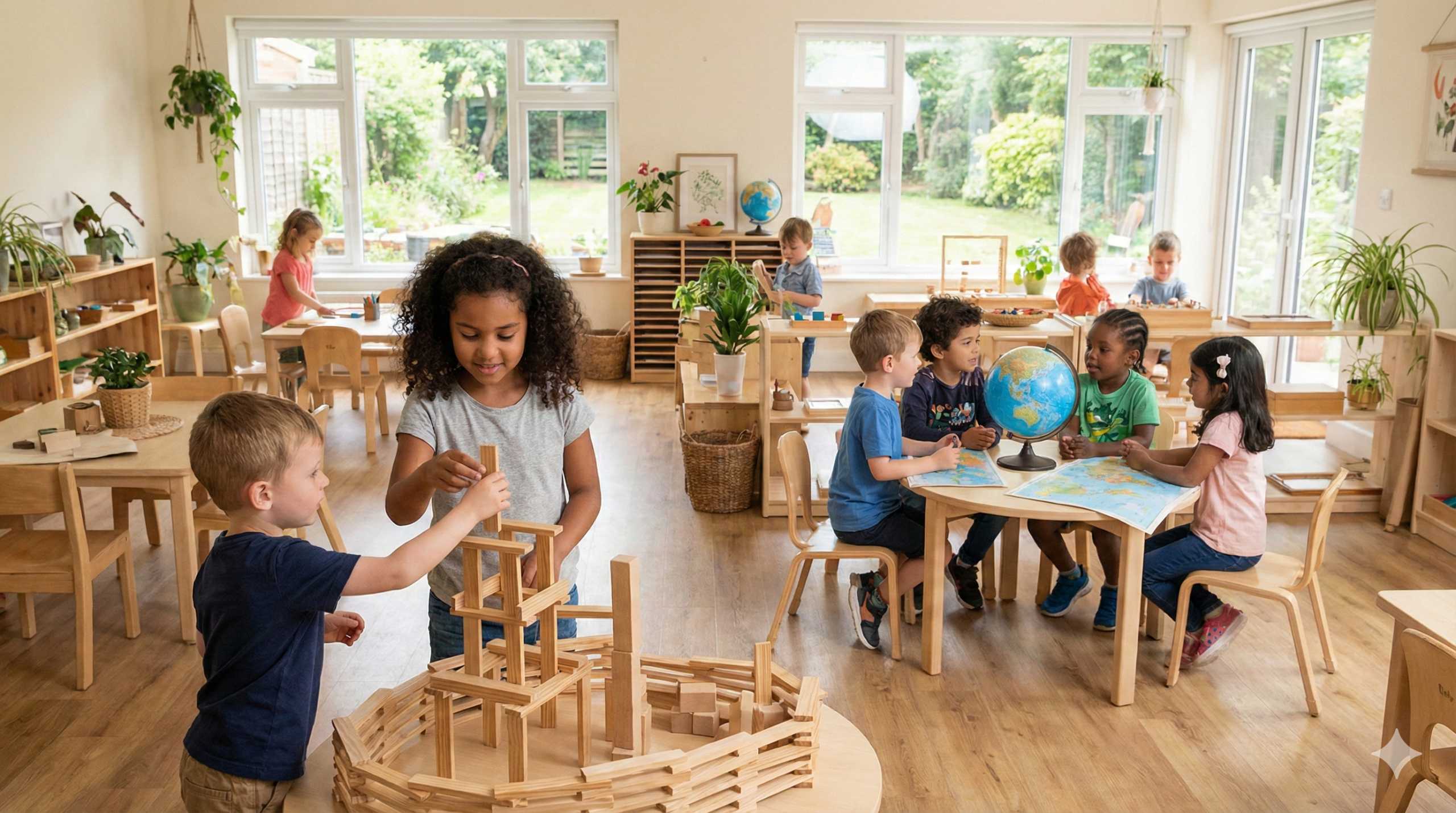
Collaborative Learning: At our Katy campus, children regularly work together on projects and investigations. This collaboration teaches them that multiple perspectives and approaches can solve problems, reducing the pressure to find the one “correct” answer independently.
When children work together to investigate how plants grow or explore the properties of water, they learn that questions often lead to more questions, and that learning is a shared journey. This collaborative approach naturally supports growth mindset by normalizing the process of not knowing everything immediately.
Documentation and Reflection: Our educators carefully document children’s learning processes through photos, recordings, and written observations. This documentation serves as powerful evidence of growth over time, helping children see their own development and progress.
Viewing Mistakes as Learning Opportunities: The Reggio Emilia philosophy celebrates experimentation and views mistakes as essential parts of the learning process. Children learn that errors provide valuable information and opportunities for deeper understanding.
Environment as Third Teacher: Our thoughtfully designed spaces at the Katy campus encourage risk-taking and exploration. When children feel safe to experiment and try new approaches, they develop the courage necessary for maintaining a growth mindset.
Cambridge Early Years: Global Perspectives on Growth
The Cambridge Early Years framework adds an international dimension to growth mindset development while providing structured progression that supports children’s confidence.
Inquiry-Based Learning: The Cambridge approach encourages children to ask questions, form hypotheses, and test their ideas. This scientific approach to learning naturally supports growth mindset by positioning children as active investigators rather than passive recipients of information.
At our Katy location, children might wonder why ice melts or how birds fly. Rather than simply providing answers, our educators guide them through investigations that teach them how to learn and discover independently.
Global Citizenship: Exposure to different cultures, languages, and ways of thinking helps children understand that there are many approaches to problems and challenges. This global perspective supports flexible thinking and openness to new ideas—key components of a growth mindset.
Structured Progression: The Cambridge framework provides clear developmental milestones that help children see their growth over time. When children can track their progress in areas like communication, mathematics, and understanding the world, they develop confidence in their ability to grow and improve.
Critical Thinking Development: Cambridge Early Years emphasizes developing thinking skills rather than memorizing facts. Children learn to analyze, synthesize, and evaluate information, building the cognitive flexibility that supports growth mindset thinking.
The Power of Integration: Trifecta Approach Benefits
While each educational framework offers valuable contributions to growth mindset development, the integration of all three creates synergistic effects that enhance the benefits of each individual approach.
- Multiple Learning Pathways: Children at our Katy campus experience diverse ways of approaching challenges and problems. This variety helps them understand that there are many ways to learn and grow, reducing anxiety and increasing persistence when facing difficulties.
- Comprehensive Support System: The combination provides academic rigor (Cambridge), individual development (Montessori), and collaborative learning (Reggio Emilia), ensuring that all children find their strengths while developing areas for growth.
- Balanced Perspective: Children develop both independence and collaboration skills, individual confidence and community awareness, structured thinking and creative exploration. This balance supports well-rounded growth mindset development.
Practical Strategies for Supporting Growth Mindset at Home
Parents can extend our Katy campus approach into home environments with these growth mindset strategies:
- Language Matters: Replace “You’re so smart” with “You worked really hard on that problem.” Focus praise on effort, strategy, and improvement rather than inherent ability or intelligence.
- Embrace Challenges: When your child faces difficulties, help them reframe challenges as opportunities to grow their brain. Celebrate the struggle as much as the success.
- Model Growth Thinking: Share your own learning experiences and challenges with your child. Let them see you struggle, make mistakes, and persist toward solutions.
- Use “Yet” Frequently: When your child says they can’t do something, simply add “yet” to their statement. This small word shift creates powerful mindset change over time.
- Focus on Process: Ask questions about how your child approached a problem rather than just whether they got the right answer. Value the thinking process as much as the outcome.
Measuring Growth Mindset Development
At our Katy campus, we observe growth mindset development through several indicators:
- Persistence: Children spend longer periods working on challenging tasks
- Help-Seeking: Children know when and how to ask for assistance without shame
- Risk-Taking: Children attempt new activities and challenges with confidence
- Response to Feedback: Children use constructive feedback to improve their work
- Celebration of Others: Children genuinely celebrate classmates’ successes and growth
Looking Forward: Building Future Leaders
As we begin this new year, the growth mindset foundation we build at Montessori Reggio Academy’s Katy campus prepares children not just for academic success, but for lifelong resilience and adaptability. In an ever-changing world, the ability to learn, grow, and adapt becomes more valuable than any specific knowledge or skill.
Children who develop strong growth mindsets become the innovators, collaborators, and leaders our world needs. They approach challenges with confidence, learn from setbacks with grace, and maintain curiosity and wonder throughout their lives.
Our trifecta approach ensures that every child at our Katy location develops these essential qualities through daily experiences that honor their individual development while building strong learning communities.
Ready to nurture a growth mindset in your child? Visit our Katy campus to see how our unique integration of Montessori, Reggio Emilia, and Cambridge Early Years creates the ideal environment for developing resilient, confident, lifelong learners.