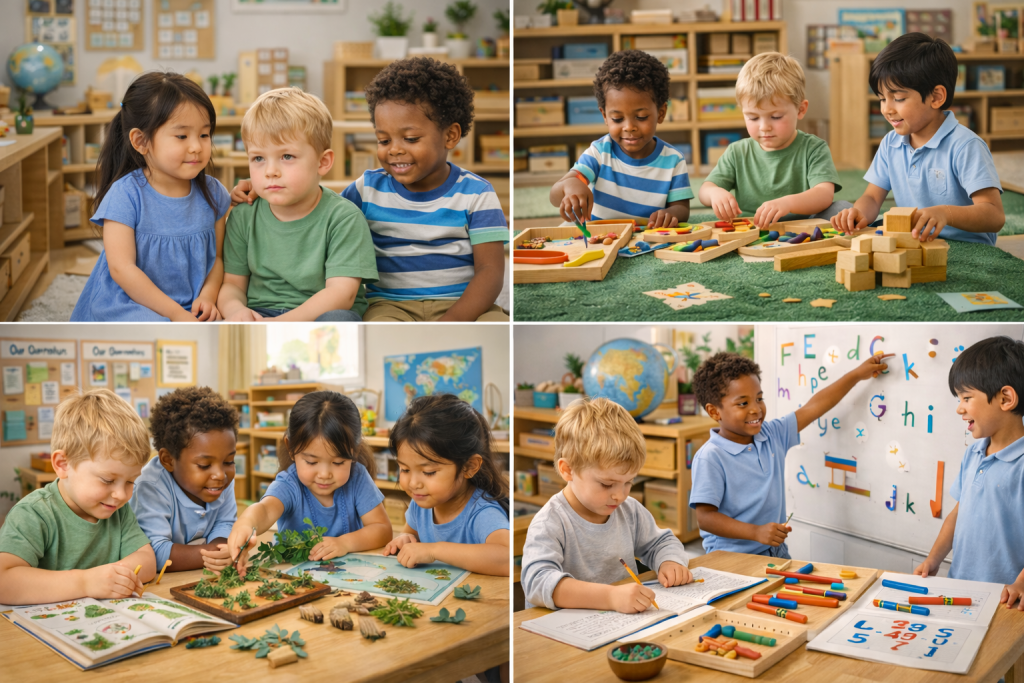
Starting preschool marks one of the most significant transitions in your child’s life. For families in Katy considering Montessori Reggio Academy, understanding what to expect during those crucial first six months can transform anticipation into confidence. Our unique trifecta approach—combining Montessori, Reggio Emilia, and Cambridge Early Years methodologies—creates a nurturing environment where every child’s developmental journey unfolds naturally and purposefully.
The first six months at our Katy campus represent a remarkable period of growth, where toddlers gradually transform into confident young scholars ready for academic challenges. By understanding the developmental milestones your child will achieve during this timeframe, you can appreciate the profound transformation taking place and actively support their journey toward school readiness.
Understanding Early Childhood Development at MRA
Early childhood development encompasses far more than academic learning. It includes social-emotional growth, physical coordination, cognitive expansion, and the development of independence—all areas where our integrated educational approach excels. Research consistently demonstrates that children who receive high-quality early childhood education during these formative years show lasting benefits in academic performance, social competence, and emotional regulation.
At our Katy location, we recognize that every child enters our program with unique strengths, interests, and developmental timelines. Rather than expecting uniform progress, our educators carefully observe each child’s individual journey, providing tailored support that honors their natural development while gently encouraging growth in all areas.
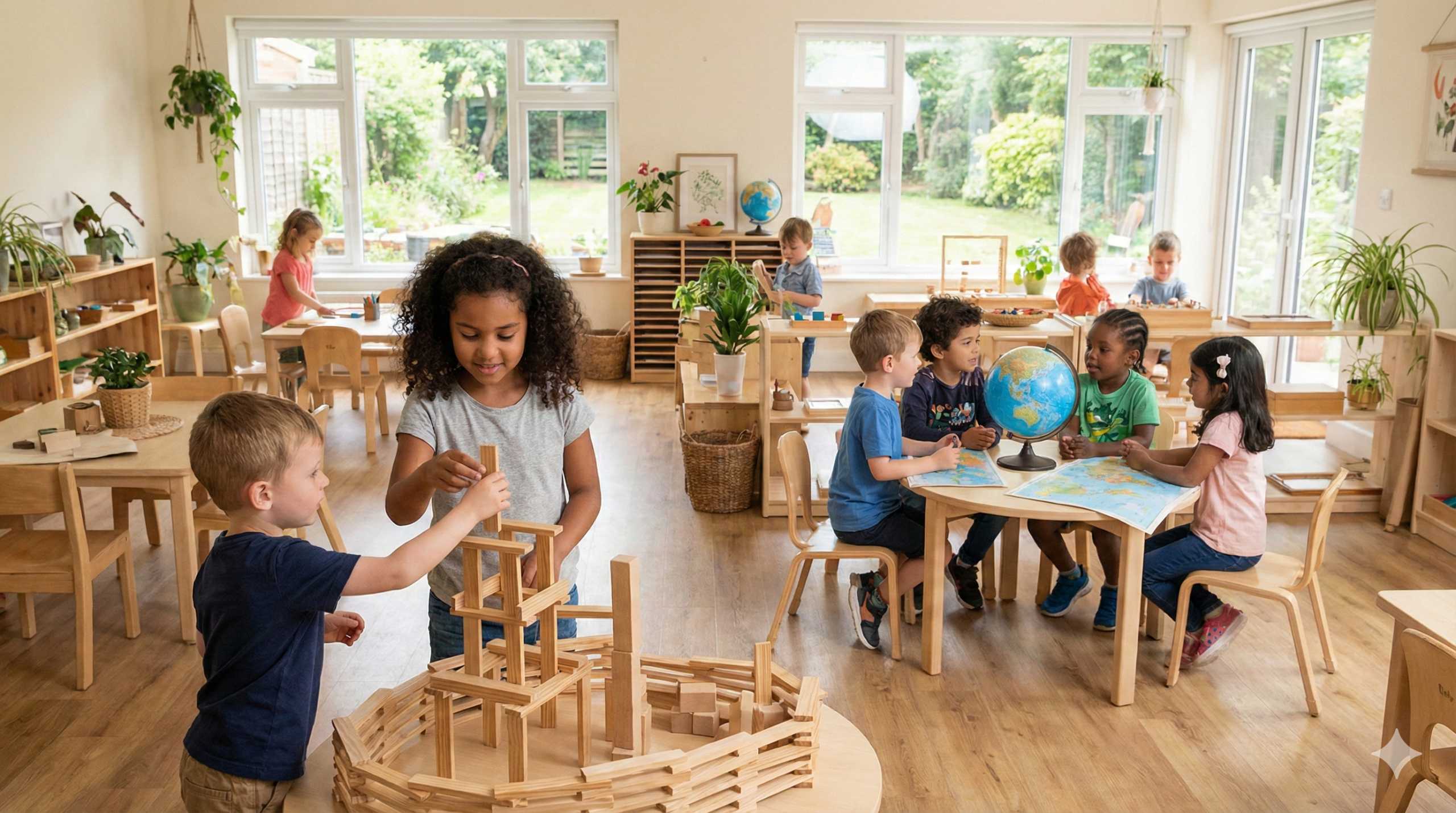
The beauty of our trifecta approach lies in how each methodology supports different aspects of development. Montessori principles foster independence and intrinsic motivation, Reggio Emilia encourages creative expression and collaboration, while Cambridge Early Years provides global perspective and structured academic progression.
Month 1-2: Building Trust and Establishing Routines
Social-Emotional Development
During the first two months at MRA’s Katy campus, your child’s primary focus centers on developing secure attachments with their new teachers and classmates. This foundational period involves learning classroom routines, understanding expectations, and beginning to feel safe in their new environment.
Children typically display increased confidence in separating from parents, though some regression in this area is completely normal during the adjustment period. Our experienced educators understand this transition and provide extra emotional support as needed.
Physical Development
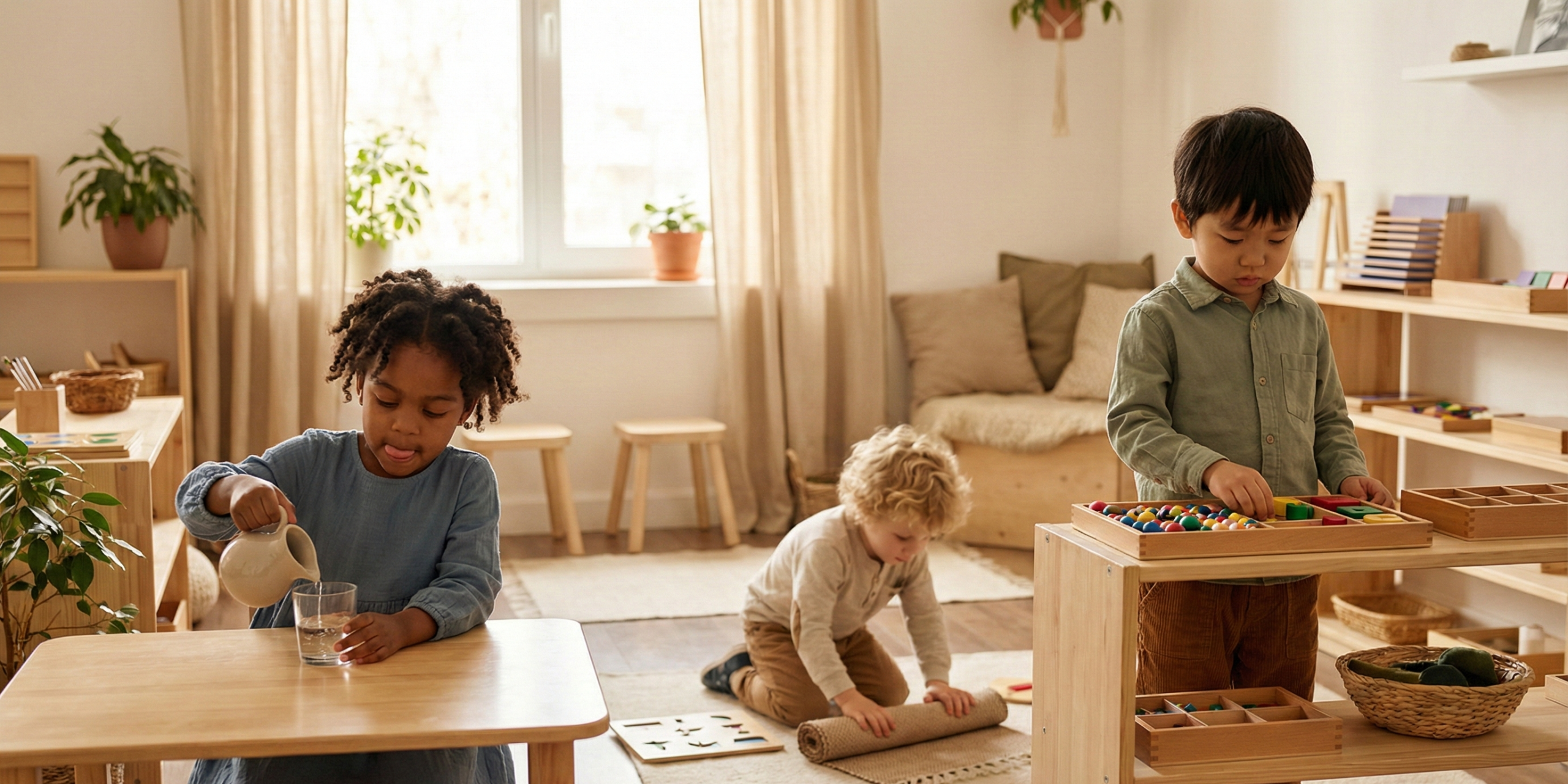
Your child will become more comfortable navigating the carefully prepared classroom environment. They’ll learn where materials belong, how to move safely through learning spaces, and begin demonstrating improved coordination in activities like pouring, carrying, and organizing materials.
Fine motor skills show early improvement as children begin engaging with Montessori materials designed to strengthen hand muscles and develop precision. Simple activities like spooning, lacing, and puzzle work contribute to this development.
Cognitive Growth
During these initial months, children begin understanding classroom systems and routines. They learn to make choices from available materials, understand the concept of completing work cycles, and begin developing concentration spans that extend beyond their typical home attention periods.
Language development accelerates as children encounter rich vocabulary through classroom conversations, stories, and interactions with diverse peers. Many families notice expanded vocabulary and improved sentence structure during this period.
Month 3-4: Flourishing Independence and Academic Engagement
Social-Emotional Development
By months three and four, most children at our Katy campus demonstrate remarkable growth in emotional regulation and social competence. They begin resolving conflicts independently, showing empathy toward classmates, and taking pride in their accomplishments.
Children often develop special friendships during this period, learning to share, take turns, and collaborate on projects. The mixed-age classroom environment provides natural mentorship opportunities as older children help younger peers.
Physical Development
Gross motor skills show significant improvement as children become more confident in their movements. They demonstrate better balance, coordination, and strength during outdoor play and physical activities.
Fine motor development accelerates notably during this period. Children can typically manage smaller manipulatives, begin attempting early writing exercises, and show increased precision in activities requiring hand-eye coordination.
Academic Progress
This period often brings exciting academic breakthroughs. Children begin recognizing letters and numbers, showing interest in pre-reading activities, and demonstrating mathematical thinking through counting, sorting, and pattern recognition.
The Cambridge Early Years framework becomes more evident during this time as children begin engaging with structured learning activities while maintaining the freedom and choice emphasized in Montessori education.
Month 5-6: Emerging Scholars and Future Leaders
Social-Emotional Development
By months five and six, children typically demonstrate sophisticated social-emotional skills. They can navigate complex social situations, express their emotions appropriately, and show genuine care for their classroom community.
Leadership qualities begin emerging as children take initiative in group projects, help establish classroom guidelines, and mentor newer students. This development reflects the foundation of confidence and competence built through our educational approach.
Academic Readiness
The transformation into “scholars” becomes most apparent during this period. Children demonstrate sustained attention spans, engage in complex problem-solving activities, and show enthusiasm for learning challenges.
Pre-reading skills often flourish during months five and six. Children may begin sounding out simple words, recognizing sight vocabulary, and showing interest in writing letters or simple words.
Mathematical concepts become more sophisticated as children work with quantities, understand number relationships, and begin simple addition and subtraction concepts through concrete materials.
Independence and Self-Care
Perhaps most remarkably, children demonstrate significant independence in self-care tasks. They manage their personal belongings, follow multi-step routines without constant reminders, and take responsibility for their learning environment.
Supporting Your Child’s Development at Home
Parents play a crucial role in supporting the developmental milestones achieved at school. Here are key strategies for extending MRA’s approach into your home environment:
Encourage Independence: Allow your child to attempt tasks independently before offering assistance. This builds confidence and reinforces the self-reliance fostered in our Montessori environment.
Create Learning Opportunities: Engage your child in real-world learning experiences like cooking, gardening, or organizing. These activities support practical life skills while building academic concepts.
Document Learning: Following Reggio Emilia principles, take photos and collect examples of your child’s work at home. This documentation helps you appreciate their growth while providing meaningful conversation opportunities.
Maintain Consistent Routines: Predictable routines support the sense of order and security that children develop in our classroom environment.
Ask Open-Ended Questions: Encourage critical thinking by asking questions that require more than yes/no answers. This supports the inquiry-based learning emphasized in our Cambridge Early Years approach.
Recognizing Individual Developmental Patterns
While these milestones provide general guidelines, it’s important to remember that every child develops at their own pace. Some children may excel in certain areas while taking more time in others—this variation is completely normal and expected.
Our educators at the Katy campus are trained to recognize and support diverse developmental patterns. They understand that some children are naturally more social while others prefer individual work, some gravitate toward mathematical concepts while others excel in creative expression.
The beauty of our trifecta approach lies in its ability to support different learning styles and developmental timelines. No child is ever rushed or held back; instead, they’re met where they are and supported in their natural progression toward school readiness.
Addressing Common Parent Concerns
“My child seems to be developing more slowly than classmates.”
Remember that developmental timelines vary significantly among children. Our educators will communicate with you if they have any concerns, and they’re skilled at providing individualized support to help every child succeed.
“Will my child be ready for kindergarten?”
The comprehensive development fostered during these six months provides an excellent foundation for kindergarten success. Children develop not just academic skills but also the social-emotional competence and independence that contribute to long-term educational success.
“How can I tell if my child is thriving?”
Look for signs of enthusiasm about school, growing independence at home, expanded vocabulary, increased confidence in social situations, and pride in their accomplishments. These indicators suggest healthy development across all areas.
Building Toward Future Success
The developmental milestones achieved during your child’s first six months at MRA’s Katy campus create a foundation that extends far beyond preschool. Children develop critical thinking skills, emotional intelligence, cultural awareness, and academic competence that serve them throughout their educational journey.
Our integrated approach ensures that children don’t just memorize facts or follow routines—they become independent learners who approach challenges with confidence, collaborate effectively with others, and maintain curiosity about the world around them.
The transformation from toddler to scholar represents just the beginning of your child’s educational journey. By building strong foundations during these crucial months, we prepare children not just for kindergarten, but for lifelong success as confident, capable, and caring individuals.
Celebrating Growth and Looking Forward
As you witness your child’s remarkable development during their first six months at MRA, take time to celebrate each milestone and appreciate the profound changes taking place. The shy toddler who clung to your leg on the first day becomes the confident scholar who proudly shares their learning adventures.
These achievements represent more than developmental milestones—they reflect your child’s emerging identity as a learner, friend, and future leader. The foundation built during these months will support them through elementary school, higher education, and beyond.
Ready to begin this transformational journey for your child? Visit our Katy campus to see how MRA’s unique trifecta approach creates the optimal environment for your child’s development. Schedule a tour to witness firsthand how we support each child’s natural progression from toddler to scholar.