When you first step into a classroom at Montessori Reggio Academy’s Katy campus, something immediately feels different. The space itself seems to whisper an invitation to explore, discover, and learn. This isn’t coincidence—it’s the deliberate result of our carefully crafted prepared environment, where every element works together to spark natural learning and support each child’s developmental journey.
The concept of the environment as a “teacher” lies at the heart of both Montessori and Reggio Emilia philosophies, and our Cambridge Early Years integration adds global perspectives to this powerful foundation. At our Katy location, we’ve created spaces that don’t just house learning—they actively facilitate it, making education feel as natural as breathing.
Understanding the Environment as the Third Teacher
Dr. Maria Montessori revolutionized education by recognizing that the physical environment profoundly impacts children’s learning and development. She viewed the classroom environment as the “third teacher,” alongside the child and the educator. This philosophy acknowledges that children absorb not just lessons and activities, but the very essence of their surroundings.
In Reggio Emilia philosophy, this concept is equally central. Loris Malaguzzi famously stated that “the environment should act as an aquarium which reflects the ideas, ethics, attitudes, and culture of the people who live in it.” When combined with Cambridge Early Years’ emphasis on global citizenship and cultural understanding, our prepared environments at the Katy campus become rich, multicultural learning ecosystems.
The power of our prepared environment lies in its ability to communicate without words. When a child enters our thoughtfully designed spaces, they immediately understand that this is a place where their ideas matter, where beauty and learning coexist, and where they have both freedom and responsibility for their own growth.
Montessori Principles in Our Physical Spaces
Our Katy campus classrooms embody the core principles of Montessori environmental design, creating spaces that naturally encourage independence and self-directed learning.
Child-Sized Everything
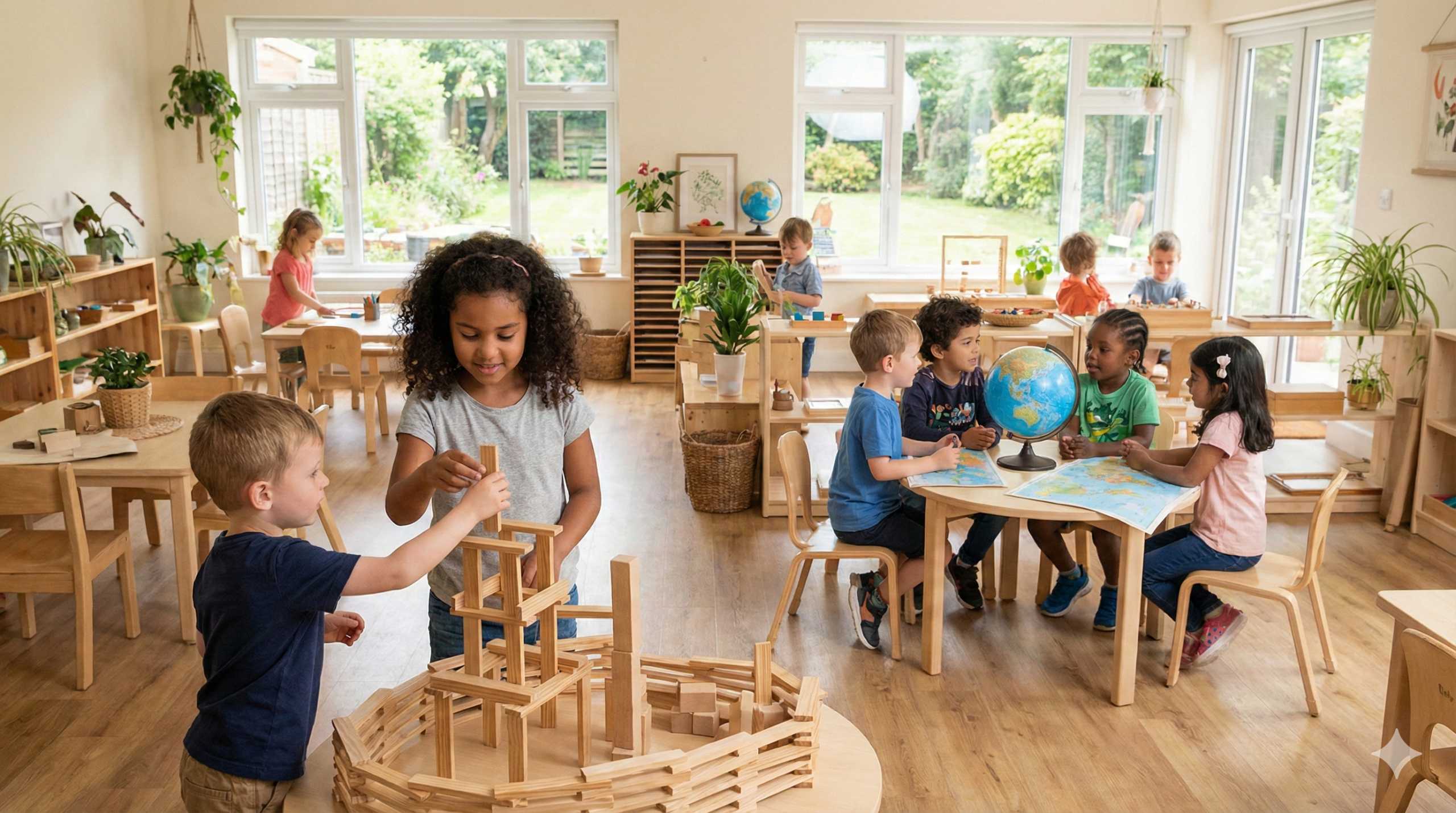
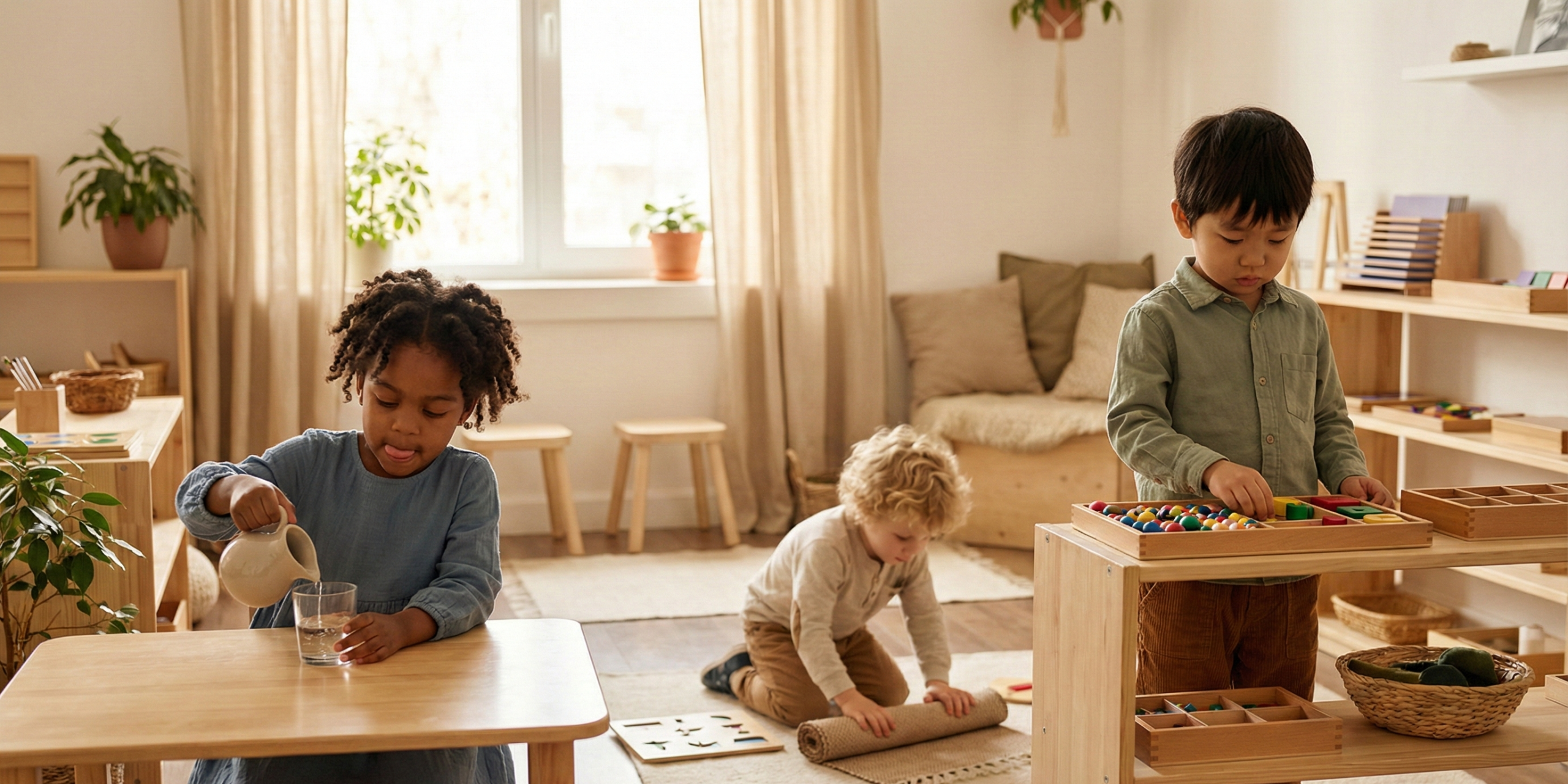
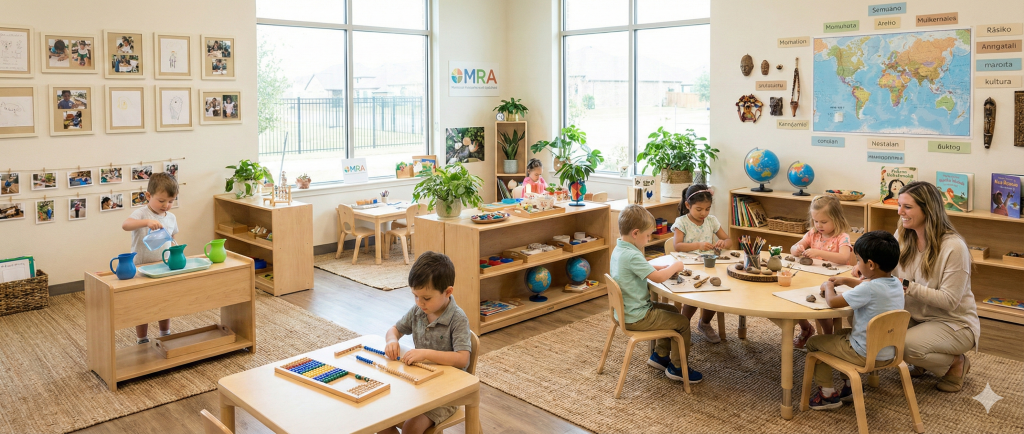
Every piece of furniture, from tables and chairs to shelves and sinks, is proportioned for children. This isn’t simply about convenience—it’s about empowerment. When children can reach materials independently, pour their own water, and arrange their workspace without adult assistance, they develop confidence and ownership of their learning environment.
Order and Beauty
Our classrooms maintain a carefully structured sense of order that children find deeply reassuring. Each material has its designated place, creating predictability that allows children to focus on learning rather than searching. This order is enhanced by the natural beauty we integrate throughout—real wood furniture, plants, natural lighting, and carefully chosen colors that promote calm focus.
Freedom Within Limits
While children have remarkable freedom to choose their activities and move throughout the classroom, this freedom exists within clear, consistent boundaries. The physical environment itself communicates these limits through its organization, helping children understand expectations naturally rather than through constant verbal direction.
Natural Materials and Reality
Our Katy classrooms feature authentic materials—real ceramic dishes for snack preparation, metal tools for practical life activities, and wooden manipulatives for mathematical exploration. Children work with glass vases for flower arranging and actual fabric fasteners on dressing frames. This connection to reality helps children develop genuine life skills while building confidence in their abilities.
Reggio Emilia’s Environmental Philosophy
The Reggio Emilia approach brings additional dimensions to our environmental design, emphasizing creativity, collaboration, and the documentation of learning processes.
Spaces for Many Languages
Reggio Emilia philosophy speaks of children having “a hundred languages”—multiple ways of expressing thoughts, feelings, and understanding. Our classrooms provide spaces for artistic expression, dramatic play, construction, investigation, and quiet reflection. Each area invites children to communicate their learning through different modalities.
Documentation and Visibility
Throughout our Katy classrooms, you’ll find displays of children’s work, photographs of learning processes, and recorded conversations about projects and discoveries. These displays aren’t merely decoration—they’re active learning tools that help children reflect on their growth and see their ideas valued by the community.
Natural Light and Transparency
Large windows flood our spaces with natural light, connecting children to the outdoor environment and the changing seasons. Glass partitions between learning areas create transparency while maintaining distinct spaces, allowing children to observe and learn from multiple activities simultaneously.
Provocation and Wonder
Our environments contain carefully placed “provocations”—interesting materials, natural objects, or thought-provoking arrangements that invite investigation and questioning. These might include a collection of shells arranged with magnifying glasses, or mirrors positioned to create interesting light patterns.
Cambridge Early Years Global Integration
The Cambridge Early Years framework adds a global dimension to our environmental design, ensuring children develop understanding of diverse cultures and perspectives.
Cultural Artifacts and Resources
Our classrooms feature authentic objects, images, and materials from various cultures around the world. Children might encounter traditional musical instruments, textiles from different countries, or books representing diverse family structures and experiences.
Multiple Languages
Environmental print throughout our spaces includes multiple languages, reflecting the global nature of our community. Children see that communication happens in many ways and that different languages are valued and respected.
Global Investigations
Learning areas are equipped for investigations that span cultures and continents. Children might research how different cultures celebrate festivals, explore various architectural styles, or investigate how children in other countries attend school.
Creating Community Through Environmental Design
Our prepared environments don’t just support individual learning—they foster the development of caring, collaborative classroom communities.
Gathering Spaces
Each classroom includes comfortable areas where the whole group can come together for meetings, stories, or celebrations. These spaces feature beautiful rugs, perhaps some soft seating, and are positioned to create intimacy while maintaining visual connection to the broader classroom.
Collaborative Work Areas
Tables are sized and positioned to encourage partnership and small group work. Children naturally come together around interesting projects, sharing ideas and building social skills through joint investigation and play.
Peaceful Spaces
Every classroom includes quiet areas where children can retreat when they need a break, feel overwhelmed, or simply want to work independently. These spaces might feature comfortable cushions, soft lighting, or natural elements that promote calm regulation.
Care for the Environment
Child-accessible cleaning supplies and organizational systems teach children to take responsibility for their shared space. Maintaining the environment becomes part of the curriculum, developing life skills and community awareness.
The Science Behind Environmental Impact
Research consistently demonstrates that physical environments profoundly impact children’s learning, behavior, and development. Our carefully designed spaces support optimal brain development during these crucial early years.
Reduced Stress and Increased Focus
Natural lighting, plants, and organized spaces reduce cortisol levels while promoting sustained attention. Children in well-designed environments show improved ability to concentrate and engage deeply with learning activities.
Enhanced Social-Emotional Development
When environments support both collaboration and individual reflection, children develop stronger social skills and emotional regulation abilities. They learn to navigate social interactions while maintaining their individual identity and needs.
Increased Independence and Confidence
Environments that truly support child independence foster remarkable growth in self-efficacy and problem-solving abilities. Children who can successfully navigate their environment develop confidence that transfers to all areas of learning.
Outdoor Extensions of Learning
At our Katy campus, the prepared environment extends beyond classroom walls to include thoughtfully designed outdoor spaces that complement and enhance indoor learning.
Natural Exploration Areas
Gardens, trees, and natural play spaces provide opportunities for scientific investigation, sensory exploration, and physical challenge. Children observe seasonal changes, care for plants, and investigate natural phenomena firsthand.
Outdoor Learning Studios
Weather permitting, many activities transition seamlessly between indoor and outdoor spaces. Art creation, scientific observation, and collaborative projects often benefit from fresh air and natural lighting.
Community Connections
Our outdoor spaces connect to the broader Katy community, helping children understand their place in the larger world while developing environmental stewardship and civic awareness.
Supporting Learning at Home
Parents can extend the principles of our prepared environment into their home spaces, supporting their child’s growing independence and love of learning.
Create Order and Beauty
Designate specific places for your child’s belongings, books, and activities. Even small organizational systems help children develop the same sense of order they experience at school.
Provide Real Materials
Offer your child opportunities to use real tools and materials—child-safe knives for food preparation, actual measuring cups for cooking, or small garden tools for outdoor exploration.
Display Learning
Create spaces to showcase your child’s artwork, writing, and projects. This validation of their efforts reinforces the value of learning and creativity.
Natural Elements
Incorporate plants, natural lighting, and organic materials into your child’s spaces when possible. These elements support the same calm, focused atmosphere they experience in our classrooms.
The Lasting Impact
The prepared environments at our Katy campus do more than support immediate learning—they shape children’s fundamental relationship with education and their own capabilities. When children experience classrooms that truly honor their needs, abilities, and potential, they develop a deep trust in their own capacity to learn and grow.
This environmental foundation supports not just academic achievement, but the development of confident, capable, caring individuals who approach challenges with enthusiasm and understand their responsibility to their community and world.
Ready to experience the power of our prepared environment? Visit Montessori Reggio Academy’s Katy campus to see how our thoughtfully designed spaces naturally spark learning and support your child’s development. Schedule a tour to witness firsthand how environment becomes a teacher and discover why our approach creates such remarkable results.